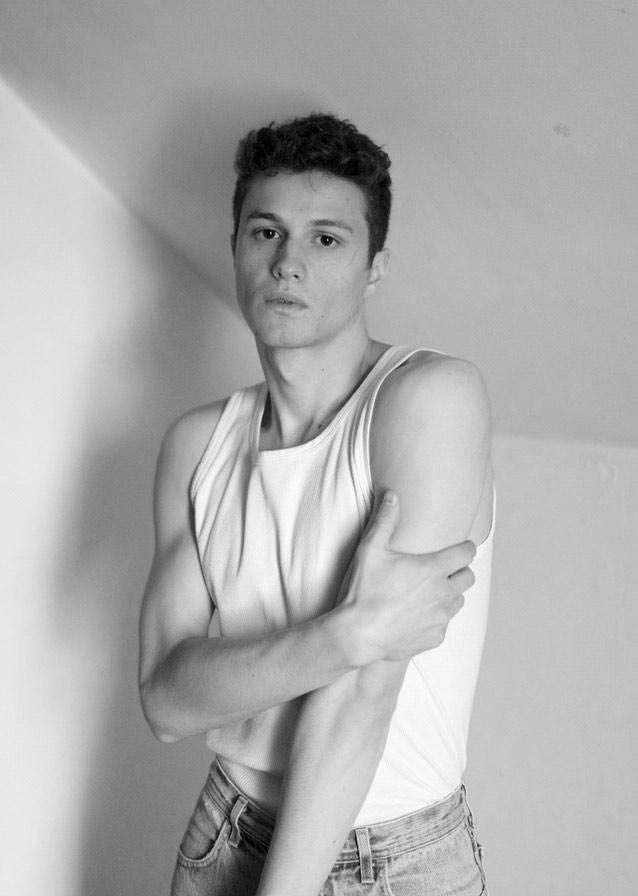
Ronald Dario – Improviser and Sketch Comedian

This week I spoke to improviser and sketch comedian, Ronald Dario about how to play dumb, teaching with Blind Tiger Comedy, and representation in Vancouver’s comedy scene.

Studying and Teaching at Blind Tiger Comedy

Ronald began performing improv in his high school drama program, where his teacher was formerly a student with The Second City. However, Ronald’s first love was sketch comedy, and his main motivation to start doing improv was to grow his skillset and make him a stronger sketch comedian. From discussions he had with his teacher, as well as viewing the pedigrees of successful television and movie comedians, Ronald thought that enrolling in The Second City was the necessary next step in his journey to make a living in comedy. This naturally meant moving away from Vancouver, and he set his sights on a relocation to Toronto. However, before he was able to move, he fortiuitously received a Twitter follow from Blind Tiger Comedy. As a fan of The Sunday Service comedy group, he recognized that members of The Sunday Service were also serving as faculty members at Blind Tiger Comedy. As they were a new school looking for students, Ronald quickly enrolled and took this opportunity to get some stage time and experience from performers that he greatly admired.

Walking into Blind Tiger’s intro classes, Ronald tells me that “I remember going into it thinking that I would be really good, like automatically,” and that he was soon humbled by the talent of his other classmates and teachers. Amongst his classmates were performers that would eventually become some of his closest friends and collaborators, and they all felt a communal hustle in order to get as much stage time as they could. Ronald shared that for many improvisers, “it’s easier for us to fail together than fail alone,” and the support they had for one another helped them form deep roots within the Blind Tiger community. After moving through the curriculum, and building up his own experience on stage, Ronald returned to Blind Tiger Comedy, but this time, as a member of the faculty. As a former student who was enrolled in several inaugural iterations of the classes, Ronald said that becoming a member of the faculty was “always a dream, but was never something that I thought would happen”.

As a teacher, one hurdle Ronald sees students struggle with “is just being comfortable with being stupid and silly in front of other people”. Sounds like me in highschool. He noticed that especially for new students, this can be a difficult habit to break due to the “veneer of control and coolness” people can put into how they carry themselves in day-to-day life. Definitely me in highschool. Earlier this year, Ronald and Blind Tiger Comedy hosted a workshop on playing “dumb” characters, an archetype that Ronald has seen performers of all experience levels struggle with. For him, the key to giving a convincing performance is to “play these characters with love in mind” and not to punch down. Adding layers of humanity and sympathy helps make these characters more believable and multi-dimensional to watch. Ronald says that this approach also translates to other difficult character archetypes including creepy characters and gross characters, although one could also argue that these traits are not necessarily mutually exclusive. We all knew that guy in highschool.

Representation in Improv

As an improviser, Ronald has collaborated with many other performers, some of whom he has known for years, and some who may have been near-strangers prior to their performance. He applauds the talent that he has been able to work with, and says that “knowing that they’ll have your back on stage, regardless of what happens” has made it much easier to jump in between different teams. Ronald also spoke on the increase of BIPOC performers in Vancouver since he began performing. He cites that he has been fortunate to not encounter any difficulties in his career as a BIPOC performer, but acknowledges that not seeing yourself represented onstage has been a powerful barrier preventing other performers from joining the community. The pandemic halting all performances has stalled the progression of many performers, BIPOC or otherwise, but Ronald is encouraged by the movements being made in our community. Seeing more representation amongst the performers he was working with meant a lot to him as he was coming up, and “made me feel like I could make my comedic voice whatever I wanted; I didn’t need to conform to a certain stereotype”. Last year he shared a collection of BIPOC improvisers, sketch comedians and stand-up comedians that he has worked with in an effort to celebrate this increased diversity; you might even spot a shoutout to an amateur blog writer amongst the ranks of some very funny people.

Like most other performers, there were many nights of grinding to get to where Ronald is now. Audiences of two people, audiences of only other performers, and audiences who simply didn’t like his work are all experiences that he went through, but Ronald looks back fondly on the shows “when I was wondering if anything would actually happen”. A major milestone for him early in his career was earning a spot in the Vancouver Improv Festival. This was a goal “that I’d written down nerdily in my notebook,” and was the first big audience he had the opportunity to perform for. This set served as affirmation that he was progressing in his own growth and Ronald still cites this as “the moment where I knew that if I kept doing it, I would be able to achieve all the things that I wanted to do”.

Follow Ronald on Instagram and Twitter for his thoughts and musings, and check out his website as well to keep up with his work.

Follow A Musing on Instagram for more content on Ronald and the other creatives in this series.

And don’t forget to check our last interview with Commercial Illustrator, Jasper Yiu.

-BF

Eric Tsang – Musician

For the first post of 2021, I had a chat with Eric Tsang, musician and manager of The Phonix. We discussed the unorthodox way he came to pursue music as a career, his experience as a music teacher, and what this new year may look like for professional musicians.

Originally from Hong Kong, Eric came to Canada when he was twelve years old, and he didn’t have any intention of becoming a musician. Like many newcomers to any country, his family did not come with swaths of money and after several years, reached a point where they strongly considered moving back to Hong Kong. However, their financial troubles ironically meant that “we didn’t even have enough money in the bank account to buy plane tickets to go back,” effectively leaving them stuck in Vancouver. Eric realized that he had to figure out a way to support himself and his family moving forward. He had a mild grasp on English but didn’t feel confident going into any of the arts or sciences, so he turned to music as “less of a passion, but more of a necessity”. To accelerate his career, he pursued a jazz degree at Capilano University and then continued on to earn a Master’s of Education at the University of British Columbia, with the aim to give himself some job security as a music teacher.

Building a High School Music Program

With his degrees in hand, Eric earned a position to teach at John Oliver Secondary School, where he was tasked with building up a struggling music program. At the time, the student body of John Oliver was dotted with kids experiencing a wide range of challenges. Many faced socioeconomic hardship and complex living situations at home. Eric realized that music held different values here compared to other schools he had worked at in the past. In wealthier neighbourhoods, Eric observed that music was certainly a class that students looked forward to, but played a small role in their lives amongst other extra-curricular activities, sports teams, and family trips. In this school, “music was really important in that they use music to keep kids in school”. Music became a transformative means to add structure to the students’ lives, foster growth and work ethic, and make school a worthwhile or even enjoyable experience. Eric also saw his role evolve while working at John Oliver, as his responsibilities as a music teacher were often also met with duties more akin to a counsellor while working with their unique student body. Another challenge was that as a teacher, he had to know how to play as many instruments as there were parts in the band. He admitted that “I suck at playing the flute,” but hey, my list of instrument incompetency is far, far longer. Over eight years, Eric played a large role to increase membership from seventy students to over three hundred strong, and create a self-sustaining program that was able to thrive without him.

The Phonix

Near the end of his tenure at John Oliver, Eric was invited by his friend Reuben to fill in as a saxophone player in The Phonix, a funk, R&B and soul cover band. The band formed soon after they all graduated from Capilano and were looking for work as musicians. Operating on the platform that “we’ll play music that we all really like, and hopefully people would like it,” The Phonix built a loyal following playing regular gigs across Vancouver. Soon becoming a regular fixture in the band, Eric was eventually asked to transition into a management role in addition to his duties as a performer. He was excited to take on a new challenge but was soon thrust into client management, rate negotiation, building a website, and all the other duties of running a small business. Over the last ten years, Eric has helped take The Phonix in many new directions including opening a community-driven recording studio for fellow musicians, a photo booth business to give their shows some added interactivity, as well as launching an app to help artists improve performer-client relations. Expanding on this latest development, Eric says that each show would generally take Reuben and himself four hours in paperwork before they actually got to perform (assuming that clients still paid them on time, filed their paperwork, and held up their end of the agreement). This inspired them to build Back On Stage, a web application that helps automate scheduling, negotiation, booking and contracts. This dropped their workload from four hours to four minutes and encouraged them to provide this service for other musicians to help expedite their work as well.

Inseparable from Eric’s place in The Phonix is his sunglasses, a mainstay in every conversation I’ve ever had with him until this interview. Like Slash without his top hat or Steven Tyler’s mic stand free from scarves, it was frankly a strange experience to actually see his eyes. He explained that these remain a fixture when he performs to help fight the stage fright he feels, especially when performing solos. Expanding on what goes into a great solo, Eric shares that “[each] thirty-second solo came from years of doing really bad solos,” and that failure is something that he had to embrace to grow as a performer. Some of his favourite memories with The Phonix include playing at a house party full of fans, as well as shows at the Penticton Peach Festival. He describes the atmosphere of playing in a living room was noticeably different than at any club he has played at. All of the attendees were familiar with the band and each other, and as he walked through the crowd “everybody is your friend; everybody’s your buddy”. Playing in Penticton was also always a memorable experience since “not a lot of festivals like to hire cover bands,” making this a great opportunity to go on the road as a group and enjoy their time out of town. Mix in some time on the water and playing to a crowd in the thousands made for a tradition that sadly feels like a relic, given the effect the last year has had on the performing arts industry.

Saxo’grams

Coming into 2020, Eric says that The Phonix were primed to continue their upwards trajectory, with gigs booked through to the December holiday season. But upon live performances being shuttered so quickly, they had to refund all of the deposits that they had received and set a new course for the year. In these stressful times, Eric “quickly had to come up with a lot of new ideas, new ways of doing things,” which include streaming shows, moving his private saxophone lessons online, and Saxo’grams, a way to spread music in a safe way. The genesis of Saxo’grams came from a desire to bring shows to folks while they aren’t able to physically go to one themselves. Eric totes his saxophone around to houses to play a song or two for the desired recipient, bringing live music right to their doorstep. Lovely, right? An additional goal of this program is to help promote other local musicians and small businesses in this time of need, and a number are featured in the videos that have been released so far. This returns to Eric’s belief that at its core, The Phonix is a community initiative. Simply put, he says that “we want to help people, and this is our way of helping them”.

Eric has returned to teaching for the time being, but definitely check out his Saxo’grams to spread some live music to your friends and family. The Phonix was named the Best Band of 2020 by readers of The Georgia Straight, check them out on their website and on Instagram, and use Back On Stage to book them for your first post-COVID party. When I started this project, Eric and The Phonix were some of the first bucket-list artists that I wanted to speak with, and I can’t think of a better way to kick off the series in 2021.

-BF

Shae Bourne – Dancer & Performer

This week I spoke to dancer and performer, Shae Bourne. We spoke about the differences between dancing on stage and in film, her early work in cabaret shows, and how dance classes have adapted to COVID-19.

Cabaret Work: The Darlings Cabaret & The Smoke Show

Shae has been dancing her whole life; it is a testament to her dedication that she has been a dancer since she was three. I can’t think of an activity I was doing at age three that didn’t involve an essential bodily function. Upon graduating high-school, Shae was accepted into a dance program in L.A. and moved to train there for six months. Reflecting on this experience, she said that “I honestly kind of got eaten alive,” by the whirlwind of moving, living, and training alone for the first time. Surrounded by much more experienced dancers made her feel like truly “the tiniest fish in the biggest pond”, and she became disillusioned with pursuing a career in this industry. Upon her return to Vancouver, she took a few months off from dance, but eventually joined a dance company called Source that was operating out of the Harbour Events Centre. Through this company, she gained more local exposure and was subsequently recruited to join another company when she was nineteen, The Darlings Cabaret. As one of her first professional dance gigs, Shae said that it was just like any job in the sense that she had to learn and adapt on the fly; the main difference being that “you’re going to watch me dance in my underwear”.

After three years at The Darlings Cabaret, Shae was approached to join a new cabaret show founded by Jen Oleksiuk, The Smoke Show. Like many of the opportunities Shae has earned over the course of her career, she was referred for this part and says that “all my successes I owe to people that I trained with” in any capacity. This time it was a mutual friend she had with Jen who had been Shae’s dance instructor many years ago. Both The Darlings Cabaret and The Smoke Show gave Shae the chance to perform on a regular basis and “learn so many skills that a lot of performers don’t get the opportunity to, at that young of an age”. With a steady stream of shows to prepare for, Shae was put in an ideal environment for growth as a performer, as she was constantly rehearsing and collaborating with her peers.

Expanding on this collaborative experience that went into building shows, since all of The Smoke Show performances are hosted at Guilt and Co., there is only so much rehearsal that could be done in a traditional studio. Shae said that “for the most part, we have no idea what the hell we’re doing until we’re in the room,” and able to be positive of timing and spacing. The interactivity between the performers and the audience is another feature of this show that can’t be rehearsed, and for Shae, confidence is paramount to make this a positive experience for everyone attending. She admits that cabaret shows “can be incredibly awkward if the dancers aren’t 100% owning it,” as they traverse tables and bars to move through the crowd. Shae credits having started performing at such a young age as key to her longevity in the performing arts in general, saying that “you have to be comfortable with you and who you are” to find success in any genre.

104 Shows in 1 Summer

Shae’s other involvements have most recently come in the film industry, but also include stage shows as well. One show we briefly talked about was a role in Rock Legends, a musical hosted by the Chemainus Theatre Festival. For those who have never visited before, Chemainus is a beautiful small town on Vancouver Island that is known for an incredibly strong arts community. Prior to this role, Shae had never done any musical theatre and had only her experience at The Darlings Cabaret on her professional record. But upon earning a spot as an ensemble dancer, she moved to Chemainus for five months and performed eight shows a week for a total of one hundred and four across the whole summer. She says that while the schedule of the run was extremely challenging, she loved the experience of living in the town itself. Since it was such a small town, she was able to enjoy being “kind of like a little celebrity” with folks recognizing her and the cast in between shows.

Dance Auditions & Hugs with Kenny Ortega

Inherent to any gigs are auditions, and I was curious whether they lived up to my pre-conceived expectations of dance auditions, mainly gleaned from A Chorus Line. While the description she gave me is set in pre-COVID times, Shae tells me that for bigger budget productions, casting will invite hundreds of people to audition all together for only a handful of parts. When she was starting out in the film industry, Shae describes this process as an incredibly intimidating environment to walk into, but it has now become somewhat of a reunion for peers that she doesn’t get to see every day. However, this camaraderie also presents its own challenges, as since everyone is in the same room together, “it’s hard to not worry about that other person,” as they are all vying for limited positions.

In one such audition, Shae was trying to secure a spot in a show directed by Kenny Ortega, the director of the High School Musical trilogy. For the record, the second installment is by far the best, no contest. At the end of the audition, all of the dancers were lined up as Kenny went down the line to meet them, and thank everyone for coming by. As he went to shake Shae’s hand, she says that “he was holding it really daintily,” instead of shaking it like everyone else. He lifted his hand, which she took as her cue to go in for a hug. Kenny responded not with a hug, but by saying “oh we’re hugging,” as he indicated that he was going to twirl her around. Let’s be honest, that is just as weird, if not weirder than a hug. Suffice it to say, he stuck with traditional handshakes for the rest of the line, with Shae being the only one “hugging Kenny Ortega in the middle of this room”.

Dance Instruction with Formation Studio

Last September Shae helped open a new dance studio, Formation Studio where she still serves as one of their founding instructors. It has obviously been a tumultuous first year for Shae and the Formation Studio team as they have had to adapt to many changes in safety regulations. Even prior to this interview, Shae was recording a class for people to check out online. However, something that has remained the same is their emphasis on creating “this environment where people can come take [a] class and literally just not care about what they look like”. Getting people out of their comfort zone has been a core tenet of Formation Studio, and a means to build a strong community that has supported them through their inaugural year of operation. The relationships that Shae has built with the people who attend her classes have been the highlight of this experience, and something she is extremely excited to get back to when we can safely do so again.

While working in film has afforded Shae the opportunity to make a living as a performer, she says that nothing replaces the feeling she has when she performs live for an audience or in a class. The time constraints placed on film performers simply do not grant them many opportunities to savour the work they are doing. Shae says that when she is booked for a film shoot, it isn’t due to any single particular physical skill that sets her apart, rather it is “because they know I’m smart enough to do this in four hours”. Stage shows require much longer rehearsal periods, that are also generally unpaid, but this process also gives her the satisfaction of being much more involved in the final product.

While this year has been quite a shift in Shae’s professional life, she is staying positive and continuing to create, saying that “there’s nothing to do for me right now other than [to] just work on myself and pick back up where I left off”. Until that day comes, check out Formation Studio, as well as The Smoke Show on Instagram. For more on Shae, visit her website for a full breakdown of her career thus far.

Follow A Musing on Facebook and Instagram for more content on Shae and the other creatives in this series.

And don’t forget to check out last week’s interview with journalist, Oscar Beardmore-Gray.

-BF

Katie-Ellen Humphries – Comedian

Katie-Ellen Humphries-Comedian
Photo by Maggie MacPherson

This week I spoke with comedian, Katie-Ellen Humphries about her career in stand-up, her new podcast Horny Off Main, and her debut comedy album, Ladyfinger.

Finding Community in Comedy

Katie-Ellen grew up in Victoria and while she was interested in stand-up comedy from a young age, there were not many opportunities nearby for aspiring comics. However, she found a home at a variety show titled Atomic Vaudeville, a show where she got her first consistent stage time and “where I cut my teeth comedy-wise”. Katie-Ellen spoke very highly of the performers at Atomic Vaudeville and felt that “I kind of got a theatre education from them,” learning to play with tension, challenge the audience and take greater risks in her own work. While she enjoyed this camaraderie, she eventually felt that she needed to move to Vancouver to pursue stand-up, despite having only a limited amount of experience. She packed her things, hopped on a ferry and then, “proceeded to not even go to a single open mic for a year,” with her only performances coming once a month at Atomic Vaudeville. A bold strategy for sure. Katie-Ellen isn’t sure what exactly caused her cold feet, but attributes it to feeling intimidated to break into a new scene and the classic “Vancouver in your early 20s depression,” where you “lie on the floor with no furniture and stare at the ceiling”. That is one hell of a shared experience. If you haven’t counted the stucco ridges on your ceiling, have you really grown up in Vancouver?

Cut to today, Katie-Ellen has over a decade of experience as a stand-up comedian under her belt and a personal theory on what truly attracts comedians to comedy. On one hand, she has the “morning radio answer” that comedians do comedy because they love to make people laugh. While this is admittedly true, Katie-Ellen’s other observation is that a catalyst behind many comedians’ entry into comedy is rooted in some form of trauma. After all, “comedy requires self-reflection and connection,” and unique material can come from how each individual processes the difficulties in their lives. With trauma such a universal struggle, Katie-Ellen expands on this notion of connection by considering the broad range of individuals that comedy attracts. Comedy traverses many traditional social divisions including world-view, socio-economic levels, geography and many other factors. In addition to this, Katie-Ellen remarks that you have “your chronological age and then your comedy age,” noting that there are few settings in which a thirty-year-old could be a mentor for someone in their sixties. This all creates a wonderfully strange environment for comics to connect with individuals they would have never encountered if not for comedy. To put this into perspective, Katie-Ellen simply states that “I shouldn’t know anyone from Iowa,” but does as a result of the unique ecosystem that comedy creates.

The Lady Show & The Debaters

Katie-Ellen’s resumé is far too extensive to sum up in a short article, but here are a few stops along her amazing career. Firstly, I asked her about The Lady Show, a variety show she runs alongside Diana Bang, Morgan Brayton, and Fatima Dhowre. As every group needs a good origin story, Katie-Ellen met Morgan and Fatima on the set of Morgan’s show, Morgan Brayton and Other People. In between takes, the three of them discussed their career aspirations and a communal desire to create content on a more consistent basis. As they all enjoyed their short time working with one another, they resolved that if they ran a monthly show, “we’d have a space that we could all create together,” as well as a hard deadline to serve as some added motivation. In one of the first installments of The Lady Show, Diana was invited to perform as a guest performer and joined full-time soon after to complete the roster. Speaking on the fortuitous and organic nature of how the group came together, Katie-Ellen says that “if I sat down in a lab, like a comedy supervillain and tried to put together the most powerful group that I would want to work with, that’s who it would end up with”. The Lady Show has been named Pick of the Fringe at the Vancouver Fringe Festival, and has been featured in the JFL Northwest comedy festival, give them a follow to stay up to date on the folks “putting the JOY in feminist killjoy”.

In addition to The Lady Show, Katie-Ellen can also be found on CBC’s The Debaters, where she serves as a writer, producer and performer. I’m not going to explain what The Debaters is, if it were up to me it would be mandatory curriculum in high school. Katie-Ellen is currently in her fourth year working with the show in one way or another, and tells me she feels very grateful that her comedic style happened to fit so well with this format. Naturally optimistic, she says her disposition to find the bright side has served her well to come up with a compelling argument “even if I’m arguing something that’s kind of shitty”. She also adds that “I am not afraid to be really earnest and sincere,” and while this is something many comedians and lowly blog writers struggle with, it is another factor that makes her material unique and personal.

Horny OFF MAIN

One of the newest projects in Katie-Ellen’s career is the launch of her podcast, Horny OFF MAIN. In this podcast, Katie-Ellen and her cohost Amitai Marmorstein welcome guests to discuss the “feelings, behaviours and habits we’re not always encouraged to express,” using horny as a measure of desire that is not exclusively sexual. Katie-Ellen and Amitai had toyed with the idea of running a podcast in the past as a shared passion project, but it was not until COVID-19 forced us into isolation that they began getting it off the ground. Like many others, they found themselves missing the personal growth that comes with “putting yourself out there,” in regards to both their work and day-to-day social interactions. As life became much more insular, a podcast became a vehicle to facilitate this growth in a safe way, and also give them a chance to catch up with some of their favourite people. New episodes of Horny OFF MAIN come out every week, I just listened to an episode with Matty Vu, another really funny individual who was kind enough to have a chat with me here not too long ago.

Ladyfinger

Ladyfinger is Katie-Ellen’s debut comedy album and a culmination of over ten years of working as a stand-up comic. Beginning with the name, Katie-Ellen describes the title of her album as “glamourous, but it’s sweet. And it’s like a little bit queer,” deeming it a fitting representation of her current act. Mixing newer and older material, she spans topics including the enigma that is Say Yes to the Dress, the merits of three-foot-long hot dogs and the poetry of minor league baseball. On the latter point, Katie-Ellen says she “feels a real kinship with minor league baseball players,” due to the difficulties athletes and performers are faced with when trying to pursue their craft. Reflecting on her career, she sees similar ups and downs, struggles brought on by the global pandemic, and the long hours of unseen work they put in just to be ready for any opportunity. Katie-Ellen describes a point a few years ago as the lowest she had ever felt, and a time in which she found herself in a “downward spiral of doubt” questioning her career path. But much like the passion that fuels minor league players, she came to the realization that “I’d be doing this, even if nothing comes from it,” because she simply loves comedy. This clarity helped her see that all of the goals she made for herself in an attempt to define “success”, were just a means to facilitate the act of doing more comedy. Ladyfinger is the tangible product of all of the work Katie-Ellen has put into comedy, from starting out at Atomic Vaudeville, co-founding The Lady Show, making a name for herself at The Debaters, creating Horny OFF MAIN, and all of the highs and lows of the grind along the way. When I asked Katie-Ellen what having an album meant to her, she instead posed the question to herself from ten years ago. Katie-Ellen says that if you told this open-micer that one day she would have her very own comedy album, she “would not have been surprised because she was wildly arrogant. But she would be fucking thrilled” as well.

In closing, Katie-Ellen shared a story from before she ever stepped foot on a stage. She was nineteen, and at a bar with her brother and one of his friends. Over the course of this night, this friend confessed to her that he really wanted to try stand-up comedy, prompting Katie-Ellen to vocalize for the first time that she wanted to as well. Following this exchange of two people who (to be clear) had never done stand up, he replied, “Oh my gosh, you totally should. You can open for me”. Gross. Katie-Ellen says that when she heard this, “in my brain, I say bitch you can open for me,” again acknowledging that at this point neither of them has any experience. This moment has stuck with her and served as fuel for the extraordinary career I have tried to do justice to in a five-minute article. Katie-Ellen says that “the point of that story is that I am completely driven by spite,” but hey. Not to keep score, but I’ve never heard of this other guy’s album.

Ladyfinger is available worldwide on October 20th, make sure to listen in here. Katie-Ellen is hosting an in-person release event at the Kino Cafe at 8pm also on the 20th, as well as an online release event on Saturday, October 24th at 7pm. Both of these events will feature some of Katie-Ellen’s favourite artists and you can find details for them here. Listen to Horny Off Main, with new episodes released every week, follow The Lady Show and check out Katie-Ellen’s website for all of the information that I couldn’t fit into our chat.

Follow A Musing on Facebook and Instagram for more content on Katie-Ellen and the other creatives in this series.

And don’t forget to check out last week’s interview with circus artist, Santé Fortunato.

-BF

Santé Fortunato – Circus Artist

Sante Fortunato - Circus Artist

This week I spoke to circus artist Santé Fortunato about earning a degree in hula hooping, travelling the world with Cirque du Soleil and her new show, Forev.

Circus College

Born in Coquitlam, and growing up in Montreal, Santé found the performing arts at a young age, competing in dance and rhythmic gymnastics as a child through her teenage years. Near the end of her high school studies, she saw an ad for a summer intensive course at the National Circus School, fortuitously located across the street from where she trained. She spent an amazing two-weeks there, and while she had applied to several traditional universities with the plan to become a French teacher, she decided to apply to the National Circus School’s college program as well. Santé was admitted into a one-year program, which was essentially an opportunity to train for a year and earn the opportunity to audition again for a spot in the full three-year program. Weighing her options, she decided to accept the one-year offer with the intention to train for a year, continue to work on her French and then begin studies at a traditional university. But after completing the one-year program, Santé was accepted into the full-time program at the National Circus School, as well as several traditional universities. She had a choice to make. Looking back on this difficult decision, Santé simply said that in the end, “I didn’t go to university and I went to circus college”. That is one of the top five sentences I’ve had the pleasure to write.

As someone who has (clearly) never been to circus college, I asked Santé what a day in a student’s life looked like. She said that from 8:30 in the morning to 5 in the afternoon, she trained in a variety of different disciplines to gain a range of experiences and identify what acts to specialize in. In the evening she studied academic classes that would be relevant to her career, ranging from anatomy and philosophy to history. Coming into the program, Santé intended to specialize in contortion, but the administration wasn’t convinced that this was her ideal fit. Looking at her background in rhythmic gymnastics, they identified that while she did exhibit great flexibility, she also demonstrated superior skills with object manipulation. After trying a variety of aerial acts that were suggested to her, Santé instead proposed focussing on hula hoops as her main act. No one in the school’s history had ever majored as a hula hoop act, but due to her unique background and proficiency at it, she eventually graduated with a major in hula hoops, with aerials and contortion as secondary acts. Despite the unusual subject matter, her education was not entirely different than a traditional experience, as she said, “you naturally compare yourself a little bit [to others], even though you shouldn’t”. Except instead of people who raised their hands a lot in lectures, she was training with some of the top athletes, artists, and performers in the world.

Following her graduation from the program, Santé dove right into the industry, booking stints on cruise ships, variety shows and other international travelling shows. Speaking on the diverse crowds she performed for, she names South Africa as an especially fun audience. She says that folks there were great participants and “got up off their seats and started dancing when they really liked something,” onstage. Similarly, crowds in Italy were always very supportive and would cheer for multiple encores regardless of how the performance went. With stops in China, Germany, Brazil, and countless other countries, Santé has travelled extensively for work and has a sobering note about Vancouver that we sadly, all already knew. She says that in some of these larger cities, people have the opportunity to see more travelling shows, which in theory should result in more appreciative audiences. However, as a byproduct of increased availability, some folks “want to pretend they’ve seen a lot more,” than they truly have, and try to play it cool during a show. This illusion of being cultured is definitely not limited to Vancouver, but remains a reminder that its ok to be amazed by something; we aren’t too cool to stand up Vancouver.

Performing with Cirque du Soleil

For the last three years Santé was living out a longtime dream touring with Cirque du Soleil. She had actually auditioned for the group immediately upon graduating from college, but due to scheduling conflicts, and the extremely competitive nature of these positions, Santé had to wait for the right opportunity. This came with the arena tour of Corteo. As this was a relaunch of a pre-existing show, Santé was placed in an unusual position. On one hand, she was cast to be part of a group aerials act and began training on a pre-existing, polished routine. This is not to diminish the difficulty of this act, Santé was performing tricks in a chandelier suspended high above the ground; pre-existing does not equate to easy. But in addition to this group act, she was also cast in a solo hula hoop act that was a brand-new addition to the show. One of only two new acts to the show, it was added to replace a former act that was removed due to new height restrictions in the performance space. She describes the creation of this act as a series of “constant experimenting” between herself, the choreographer, and the director; a rare opportunity to create something new in an existing show. Lifts, elevation changes, set pieces and other performers were added to compliment her performance, which resulted in a product that was especially unique to her. In between training, performances, physiotherapy, travel, and much more, Santé describes this experience as extremely taxing but also the fulfillment of a lifetime dream saying, “we do it because we love it. You don’t become a circus artist because you want to be rich”. In this run, she also earned the title of being the first Canadian hula hoop performer to perform with Cirque du Soleil, an amazing accomplishment. But for Santé, this show was memorable for more reasons than individual accolades, as it was also the place where she met fellow performer and now husband, Alexandr.

Forev, an Original Show

Due to the COVID-19 outbreak, Corteo was suspended, and Santé and Alexandr were left with an unusual abundance of time on their hands. They decided to pursue a dream they had pushed to the side for a long time, and create their own show. They had always wanted to have a show that they could travel with as guest entertainers, and the sudden halt to the performing arts provided the perfect opportunity to write and rehearse such an act. Santé said that they had to get creative to fill a fifty-minute show with just the two of them, becoming inventive with their transitions within the narrative to give them necessary reprieves. Santé and Alexandr perform three full acts each in this show, a significant step-up from the traditional one or two acts a performer is generally tasked with. Titled Forev (a combination of their last names), this show takes audiences on a journey through the timeline of their entire relationship, including acts representing their first date, proposal, and wedding. They also weave other media components into the narrative, like the audio of a letter Alexandr wrote to Santé before he proposed, and candid footage from their time together on tour in Corteo. As safety precautions limit the size of public gatherings, a cast of two performers allows them to welcome in more guests, many of whom are starved for live performances and would agree that “you just can’t get that same energy from TV”. Their first show is sold out, but tickets for Sunday, October 18th at 4pm are available at the time of writing, check it out!

Looking back on her professional experience, Santé shares that staying disciplined in her diet, training, and recovery has been essential to maintaining such as busy schedule. Behind every single moment of every act is years of training and Santé says that this can easily be lost to the audience in the heat of a live performance. Despite the physical and mental challenges that this lifestyle provides, Santé says that “the richness that you get from travelling” is also one of the most rewarding aspects of her career. This richness extends far beyond simple sightseeing and includes learning new languages and having the opportunity to “understand and learn about the world” in a way that many people would love to have. Who doesn’t want to run away and join the circus?

At the time of writing, tickets are still available for Forev on Sunday, October 18th! For more information and to watch the trailer, follow Santé on Instagram. And if you needed any more convincing to go see Forev, Santé and Alexandr were recently in the running for the title of Canada’s most talented family. They were robbed if you ask me.

Follow A Musing on Facebook and Instagram for more content on Santé and the other creatives in this series.

And don’t forget to check out last week’s interview with artist, Lay Hoon Ho

-BF

Aidan Shamray – Artist

Aidan Shamray - Artist

This week I speak to artist Aidan Shamray about defining the differences between singles and albums, the impact visuals can have on a song, and the release of his new single, “Blue”.

While he has been releasing music at a furious rate as of late, Aidan has been producing for over 4 years. Looking back on his first tracks, he says that while the arrangements were not his best, he can still relate to the excitement and passion he felt as a new artist. Starting out, he felt confident sharing the lyrics, arrangements and mixes he had created but was much more nervous regarding the music videos he produced to accompany them. For him, performing on camera was “the first time expressing myself in such a direct way,” and felt much more vulnerable than a purely aural experience. To complement his performances, Aidan integrates different visual elements and he says that it has been a great learning experience to become more comfortable with the tools he has at his disposal. There was initially a greater disparity between his music and filmmaking skillsets, but he feels that he has closed this gap through repetition and practice. He also doesn’t separate these two worlds, rather he considers the visual experience an extension of the music, letting the music influence visual aspects such as subject matter and colour palettes.

The Benefits of Releasing Singles Over Albums

Aidan’s recent releases have all been singles, and when I asked him whether he had considered combining them into an album, he expressed his indecision on what qualities define an album. He said that as someone who has released albums in the past, “I struggle with if an album necessarily needs to have a consistent sonic cohesion amongst it” to hold it together, or if it may contain songs with no apparent similarities between them. If the answer to the former question is yes, then he would not consider his recent singles as part of a bigger album due to the varying stylistic differences between them. Moreover, he has found that the labour cost is significantly higher to create an entire album than it is for a single. In a social environment in which attention spans are at an all-time low, Aidan feels that you need to have “really thought about how you’re going to sustain interest in it,” in order to justify the investment of time, funds, and marketing efforts to create an album. For him, singles “allow me to challenge myself and do different things every single time,” granting him the freedom to cross genres and styles in a way he wouldn’t necessarily have within a traditional album.

On September 25th, Aidan is releasing “Blue,” the next single in his discography. “Blue” is a ballad he has been tinkering with for a while; he had written it several months before, but struggled to find the complementary parts to build around the main guitar line. Taking some time away from this song proved fruitful to breathe new life into it, and he expressed that “I love how so much of music is recycling” old ideas into new ones. Aidan also says that “Blue” is a snapshot of the struggle to “make the right choice not only for myself but for people that enjoy what I do;” a balance that affects artists in any discipline. Aidan says that this internal back and forth can result in delayed release dates, or deter him from releasing more experimental work, but is still part of the creative process that ultimately helps appease both himself and his listeners.

The Workflow of a Solo Artist

When it comes to writing the lyrics to performing the arrangments, mixing the recordings and finally creating the accompanying visuals, Aidan has largely been the sole architect of his creative body of work. While he says he is certainly open to writing or producing for another artist, at this point he isn’t sure if he could work with another lyricist or musician on his own projects. He explains that “so much of what I come up with is just me mumbling and then figuring it out,” that it would be difficult to integrate another artist into his usual workflow. However, he adds that “I can definitely admire other people’s skills,” when dreaming up bigger projects or developing more complex visuals, and by no means has Aidan written himself off as completely a solo act.

Reflecting on the past four years, Aidan says that “I feel like I’m always creating,” regardless of whether he has been releasing music on a consistent basis. He has refined his workflow to the point where he can now release new music with regularity, something that used to feel much more insurmountable to do. Aidan tells me that when he was starting out, he would get hung up on the little details, overwork aspects that were already working and miss the big picture of the whole song. Using a drumline as an example, he realized that “it makes zero sense to try and save this snare when there are so many options” to explore and play with. This shift in his mindset has saved him great amounts of time when recording, added stability to his workflow and has brought a lot of the joy back into creating, now that “the content is there and the content is there consistently”.

My favourite artists are the ones who are cool without even trying and Aidan is no exception. He describes a time last winter when he would run out to his car at night and listen to his music to see how his songs would sound in a car; repeating this process for each of the nine songs on a past album. While tedious under normal circumstances, this was complicated by the -40 degrees Celsius winters of Brandon, Manitoba that necessitated “holding my phone so it doesn’t freeze” and turn off. Nowadays, Aidan is confident enough in his mixing abilities that such experiments are not necessary, but he cites this memory as just another example that “I will go to the end of the world for my art and to deliver the best product available”.

To support Aidan and prevent future ice escapades, give him a follow on Spotify to hear his backlog of work and on Instagram to see the visual companions to his tracks. He is releasing music on a monthly basis with “Blue” coming out on all streaming platforms on September 25th.

Follow A Musing on Facebook and Instagram for more content on Aidan and the other creatives in this series.

Don’t forget to check out last week’s interview with actor and filmmaker, Jenny Lee-Gilmore.

-BF

Jenny Lee-Gilmore – Actor & Filmmaker

Jenny Lee-Gilmore - Actor & Filmmaker

This week I spoke with actor and filmmaker Jenny Lee-Gilmore about working with children, intersectionality and representation in film, and her short film Breakaway, soon to air on CBC Gem.

Acting, Producing, and Other Roles

Jenny’s start in filmmaking was not like it is in the movies. Growing up in a small town in England, she didn’t view the film industry as a viable career path. Her first exposure to it only came when she moved to Vancouver and was signed to an acting agency when she was fifteen years old. However, she had always enjoyed creative writing in school, so when she realized that she could pursue a living writing for films, she decided to apply to the Film Production program at The University of British Columbia. While there, she experimented with several different roles on set and credits the program for allowing her to “dabble and learn what you liked”. She found that she especially enjoyed producing, a position in which she continues to work. Jenny shared that while there are definitely technical aspects to this role, one of the biggest challenges she faces is being “a mediator of all the different departments and making sure everyone is feeling heard”. While acting as the liaison for so many independent bodies gives her a great deal of fulfillment, she also adds that to stay energized, she needs to balance the producing gigs she takes on with her own independent creative work as well.

Moving to her work in front of the camera, Jenny began acting when she was fifteen years old, but didn’t really find her footing until a couple years later. Much of this formative time was spent auditioning for commercials, a process in which “you never know what you’re gonna do until they ask you in the moment”. On one especially memorable audition, Jenny recalls walking into the casting room to see a casting assistant spraying Windex on a sheet of plexiglass. (To be clear, this was not a COVID precaution. Quite the opposite). Once a sufficient layer was applied, the assistant then wiped down the sheet, removing a series of lipstick marks from the glass. Jenny was then instructed to “shove your face on this plexiglass and try and make this kid laugh” who was sitting on the other side. I didn’t ask Jenny what product they were trying to sell, but I’m pretty sure it was either midcentury Dutch furniture, red cabbage or Volvos. Unfortunately, she did not book this role, but it doesn’t seem to have hampered her career much (to this point).

Working as both a filmmaker and as an actor has given Jenny perspective on both sides that have cumulatively made her better at her craft. As an actor, she says that “I learned so much more about acting from directing actors” than in any class she has taken. For example, she has learned to bring her own array of options for a performance instead of trying to view the character from simply what the director would want to see. In addition, participating in the casting process as a filmmaker has helped her brush off her own unsuccessful auditions where she simply may have not been the right fit for the role. Conversely, as a director and producer, she has learned to ensure that the actors are included in the decision-making process and also recognize the vulnerable state many actors have to go to when delivering a performance.

Working with Wild and Child Cast Members

One of the first rules taught to film students is to never work with children or animals, but as we move to Jenny’s current projects we will emphatically tick both boxes off the list. Beginning with arguably the more trainable actors (animals), Jenny just wrapped her tenure on a wildlife rescue program showcasing the Marine Mammal Rescue Center here in Vancouver. As an On-Set Coordinator, she explains that by nature of the subject matter “you can’t really plan; there’s no schedule for the day” as they wait for a rescue to happen. This unpredictability kept the job engaging, as did the many, many, seals that Jenny got to interact with. As an aside, the individual taking over the reins on this process is none other than Dide Su Bilgin, who you may remember from an earlier article.

Moving on to working with children, even though Jenny only graduated from university in 2019, she has already amassed a significant amount of experience with child actors. Most recently in her short film, Breakaway, she cast a young girl named Kailee Lowe as the lead. There were several debuts to note at Breakaway with Jenny directing the first short film that she had also written, and Kailee acting in her first professional gig. Jenny says that this general inexperience is one of her favourite parts about working with children, as “they tend not to have any sort of ego or awareness of themselves,” lending themselves to giving more realistic performances.

While casting this film, Jenny had extra pressure to find a good fit for the titular role as the story of Breakaway is centred on the story of her own mother. Jenny tells me that her mother faced many barriers in the 1970s as a young, Chinese woman who was interested in playing ice hockey. Gender, class, race and other factors intersected with one another and created a narrative that Jenny thought had parallels to her own experience as a biracial woman in the film industry. This story has also struck a chord with many other viewers, as Breakaway was selected for streaming in an upcoming film competition on CBC Gem this October.

Representation in Film

A common theme throughout all of Jenny’s personal projects is her stance that “it’s really important to make things that you want to watch or would have liked to have watched growing up”. Growing up in a small town, Jenny says that she never felt that the media she consumed was representative of her personal experiences or point of view. Therefore, she feels a responsibility to try and improve the levels of representation for other individuals in similar circumstances. This also manifests in her student short film More Than Just a 1/2, which documents her experience growing up biracial. One of the few Asians she saw on screen as a child was Sandra Oh, who she ultimately had the chance to work with soon after graduating from UBC. Jenny says that Sandra certainly lived up to expectations as she “ugly cried in her arms for about five minutes”. (Hopefully, it is clear who was doing the crying and who was doing the holding). Unfortunately, Jenny adds that “I blacked out and I don’t remember any of the advice she gave me,” which will sadly be forever known to only Sandra Oh, a true Canadian treasure.

In closing, while Jenny continues to pursue filmmaking on both sides of the camera, don’t be offended if she hasn’t seen your film. Living with narcolepsy, she says that the dark confines and comfortable chairs of a theatre don’t exactly create an environment in which her attention is maximized. For this reason, Film Studies was a notoriously difficult course for her, but she adds that on the bright side, “it’s a really big compliment if I stay awake in your feature film”. Who knows if she has made it to this point in the article.

For more on Jenny, stay up to date by following her on Instagram and Twitter. Also, make sure to check out Breakaway when it hits CBC Gem this fall.

Follow A Musing on Facebook and Instagram for more content on Jenny and the other creatives in this series.

And don’t forget to check out last week’s interview with textile artist, Julie Newton.

-BF

Matty Vu – Comedian

This week I spoke to comedian, Matty Vu about his experience as a producer and co-host, diversity in comedy, and his recent feature on CBC’s “Next Wave of Comedy”.

Matty’s journey in stand-up began six years ago when he enrolled in a stand-up class with Instant Theatre, a school that you also may remember from our article with Nathan Hare. Prior to this, Matty was a frequent attendee at The Laugh Gallery, a longstanding show run by Graham Clark. As a result of the friendship with Graham that he had established as an audience member, Matty’s first sets upon graduating from Instant Theatre were on The Laugh Gallery; an unusually quick trajectory for a new comedian. But after a run of well-received performances, he parlayed these sets into appearances on more shows, quickly gaining experience as a performer and confidence in his material.

Bloodfeud and Yellow Fever

While taking stand-up classes at Instant Theatre, Matty was also offered the opportunity to supplement his performing chops and take some improv classes. There he met improviser Malcolm McLeod, and over the next few months, they began tinkering with the idea for a collaborative show featuring both stand-up comedy and improv. Having made friends in both genres of performance, Matty wanted to create a show in which they could come together and create a unique experience for the audience. Eventually, this materialized into Bloodfeud; a show that has now run for three years with the format of four stand-up comedians performing material that inspires long-form improv by a team of improvisers. The inspiration for the name came from the online banter between Matty and Malcolm in which they would sign each of their posts with #bloodfeud. As for the format of the show, Matty says that “we’ve basically stolen from every show” they enjoy to form Bloodfeud. Examples of this include implementing dual hosting duties that were present at Jokes Please, as well as ensuring a talent pool of mixed genders, races and backgrounds that Matty enjoyed at The Laugh Gallery.

In addition to Bloodfeud, Matty also serves as a co-host and co-producer of Yellow Fever, a show that was recently featured alongside Bloodfeud in the JFL Northwest comedy festival. He says that the goal of Yellow Fever was to provide a platform for newer, less-experienced Asian comics to showcase their material to a wider audience. When he was approached by JFL Northwest to be included in the festival, Matty says that alongside co-producers Tin Lorica and Ronald Dario, they recognized the opportunity to push the organizers of JFL to promote Yellow Fever as more than simply a diversity act, or a symbolic checkbox on the festival. After several discussions on what this would look like, they were able to negotiate a larger venue in the Biltmore Cabaret as well as a great headliner in Sheng Wang. Matty describes this year’s festival as an amazing experience for him as Yellow Fever opened on the first night of the festival and Bloodfeud was featured on the closing night. I had the pleasure of being on the first-ever installation of Yellow Fever, and would like to credit myself for being the absolute sole reason behind its success.

The Mechanics of Producing Comedy

Between Bloodfeud, Yellow Fever, and another show titled Craft and the Furious, Matty has had extensive experience as a producer and host. (In case you thought you were the only one with this idea, Craft and the Furious is a show in which Matty and other comedians join the audience in making crafts while watching movies from The Fast and The Furious franchise). He says that one of his key learnings as a producer is recognizing that “you have to do a lot of the work,” before you even get to perform. From marketing the event, booking performers and even stocking the bar for the audience, there is a lot of offstage work that goes into producing a successful show. To expand on booking talent, Matty explains that “you can’t just say yes to everybody or reject everybody” either, but he has placed an emphasis on representing voices from people of colour and female comics. When he began performing, he didn’t feel like he belonged or even enjoyed many of the rooms he was in, so improving this experience for other comedians and audiences has been a huge source of inspiration for how he curates talent on his own shows.

Moving to his hosting duties, Matty says that cultivating a good flow with his fellow hosts is often “the thing we worked the hardest on for the show”. For example, through the first editions of Bloodfeud, Matty and Malcolm tried an adversarial approach with one another, but they found that this did not always resonate well with audiences. Eventually, they realized that in the context of a show, “your audience is the guest in the host’s house,” and that it is the host’s responsibility to both earn the audience’s trust and set the following performers up for success. At times, this can mean dealing with unruly guests or as in one instance welcoming an entire bachelorette party who came to a very special edition of Bloodfeud. Aside from all twenty of them leaving five minutes before the show ended to catch their limos, Matty claims that they were a relatively good crowd due to a smattering of light warnings and jabs towards them to open the show. He explains that addressing a potentially rambunctious crowd from the very beginning can help diffuse any negative ideas, and even a simple “don’t be annoying” can help ensure a positive experience for everyone in the room.

The New Wave of Standup

Matty’s most recent accomplishment in comedy was being featured on CBC’s “New Wave of Standup” series that was filmed during the JFL Northwest festival and was recently released online. He was the opening performer when it came time to film, and though he admits he was nervous to go first, it was a relief to be finished as he saw the nerves from the other comics yet to go on. As a bonus for those of you who like Easter eggs, he also says that in some of the subsequent performances you can see him in the background “dancing, or doing something silly” with the other comedians. You have to love content with solid rewatch value. Matty says that this experience was extremely validating to not only be selected for this series but also to be given freedom by the producers to curate his set the way he wanted it to be. More holistically, he considers this one of the highlights of his stand-up career thus far, reflecting on some of the negative experiences he has had in comedy in contrast to “this fun night where you get to feel special doing stand up”.

Six years into comedy, Matty says that his comedic style has remained relatively unchanged since he began. He attributes this to the fact that since he was twenty-nine years old when he started, “I was a mostly formed human person” and therefore still has similar outlooks on life and comedy. In terms of his material itself, Matty noticed that “a lot of comics talk about things that make them mad, where I’m just like no, these are the things I love”. For myself, this positive world-view separates Matty’s sets from most others, and I think audiences who have seen him would share the same notion. Earning opportunities to perform on new shows and with new comedians continues to fuel Matty’s passion for comedy, but he recognizes that the current state of comedy still has room for improvement. He says that while it is great to see more Asian comics onstage, it’s important to continue supporting venues and shows that provide these opportunities, stating that simply “having that space will keep people to stick around and do more”.

In case you are wondering, Matty cites the “silly and terrible” Tokyo Drift as his favourite in the Fast and Furious canon. To keep up with him, look for @themattyvu on social media, and check out his set on CBC’s “The New Wave of Standup”.

Follow A Musing on Facebook and Instagram for more content on Matty and the other creatives in this series.

And don’t forget to check out last week’s article with aerialist, Marianne Rico.

-BF.

Marianne Rico – Aerialist

Marianne - Circus Artist

This week I spoke with Marianne Rico, an aerialist with experience including silks, hoops, and pole dancing. She shared some advice for newcomers, what it’s like competing in the circus arts and the launch of her Youtube channel.

Marianne’s journey as a dancer started at the age of six or seven, and only stopped at nineteen when she felt like she had exhausted all of the resources at her local studio. However, her time away from dance was short-lived as she decided to try a silks class after being inspired while channel surfing in her second year of university. Like many others, Marianne’s first interaction with silks was when she came across the now-infamous performance of P!nk singing while suspended by silks in the air. Just another reason you should love P!nk. (There’s a joke there for the real Pink fans). Spurred on by this performance, Marianne completed four weeks of silks classes but shared that she struggled with the level of upper body strength required just to get high enough to perform any tricks. However, the room in which the silks classes were held was fortuitously located beside the room in which the pole dancing classes occurred. After watching their classes from afar, she mustered up the courage to attend her first pole dancing class. I have trouble committing to a background on my phone.

The Ups and Downs of Pole Dancing

When Marianne first began pole dancing, she faced a negative stigma with people immediately assuming pole dancing was synonymous with stripping. She says that the vast majority of people she spoke to underestimated the strength required to perform any tricks, and overlooked the fitness benefits offered by this style of dance. Similarly to silks, Marianne describes the physicality of pole dancing as utilizing a lot of muscles that generally aren’t called upon in day-to-day life, but at its core require a lot from her shoulders and lats. Luckily for Marianne, her background in silks provided a base to overcome the steep learning curve that affects many dancers coming straight from a “traditional” dance background. This outlet also provided a means of expression and fluidity that Marianne didn’t always find in silks, propelling her to spend the next two years bouncing between the two forms. Over this time she progressed to learn more complicated tricks and combinations, but this came at the expense of a lot of burns and bruises from the pole itself. She says that to perform any of her tricks, “you’re just holding [yourself] by maybe like one or two parts of your skin;” this necessitates wearing as little as possible to maintain a firm grip, but consequently exposes more of your body to injury.

After a year and a half into pole dancing, Marianne decided to enter her first pole dancing competition, travelling down to Seattle with some fellow dancers from the studio. Marianne prefers to compete in the Lyrical category, rooted in strong, emotional storylines and soulful songs as opposed to the focus on entertaining the audience present in other styles. In her first competition, she underestimated the stamina she needed to complete her three-and-a-half minute routine and upon a poor finish was dissuaded from competing again until last year. Marianne says that the biggest hurdle that she got over in this interim period was the stage fright she felt the first time she competed. She describes dousing her hands in liquid chalk to combat the nervous sweats because just in case it isn’t clear, “you need to have really dry hands to grip onto the pole”. With this added experience (and liquid chalk) in hand, she ended up placing and even winning her first competition. While Marianne says that winning was a great experience and one of the highlights of her career, she adds that her favourite part of competing is the community she has found. Watching dancers from all levels of experience and in a myriad of styles, as well as getting to know the other dancers themselves is something she always looks forward to when competing.

Hoops and Other Aerial Arts

Over the past few years, Marianne has shifted her focus to hoops, even moving to teach hoop classes in 2016 and compete in this field as well. As one of the many circus apparatuses Marianne has gained experience with, this form stood out to her since it placed less of a direct emphasis on upper body strength that was needed in silks and pole dancing. This is not to say that it comes without its difficulties; Marianne says that the first month for any hoops student is spent on the ground building up strength and confidence to eventually perform in the air.

When comparing silks, pole dancing, hoops, and the other skills she has learned, Marianne says that she has greatly benefited from experimenting with so many different forms. Some tricks are able to be translated between the apparatuses, and moving between them has helped her improve her overall fitness and strength. As a whole, she has found that the aerial arts provide a never-ending opportunity to learn new skills and tricks; there is always something that is “just a little bit harder, or a little bit scarier”. Instagram has been a great resource for her to get inspired by other artists, or directly learn new tricks from the footage that they share with the community. Marianne explains that she had reached a point where she was struggling to find teachers to further expand her skillset, so turning to the deluge of content on Instagram was a great way to train without a teacher.

Self-Expression

Despite the benefits that Instagram provides, Marianne expressed her frustration at the shadow banning of pole dancing content that has plagued this platform. She says that this has been a large impediment to separating pole dancing from the stigma of stripping, and “to actually show it as a sport”. Producing content to share online was one of the ways Marianne became more comfortable with herself when she first began pole dancing, and this content has similarly resonated with like-minded individuals all over the world. She says that as a community of performers, they are trying to normalize pole dancing as a form of fitness and show that that “there’s so much strength and a side that nobody else gets to really see”.

Marianne’s personal journey towards self-expression is intertwined with her Christian family and the religious lifestyle that she continues to lead. She says that when she first began pole dancing her family and friends struggled to reconcile their preconceived negative connotations with who they knew before. It took a while to show them the benefits that she was gaining from this pursuit including the physical strength she was building, growth in her self-confidence as well as a means to improve her mental health. Furthermore, the fact that she was the only one she knew in her community performing as an aerialist felt “so unique and personal” to her and pushed her to find others who were equally as passionate as she was. Looking back on her first pole dancing class she remembers being so uncomfortable she told her friend “I don’t know what to do with my hands,” which in all fairness is something I ask myself in any activity. It was a slow buildup to become more comfortable with herself and get to the point where “I can walk around in eight-inch heels and not care,” perform for large crowds at taboo conventions and begin her own business photographing other aerial artists.

As a general rule, Marianne says that “I don’t believe in being perfect but I do want to achieve a high level” in anything she pursues. This continues to push her to learn new tricks, reach new (literal) heights and try out even more techniques. It is a testament to her range that I didn’t even mention that she’s also versed in trapeze. To keep up with her performances as well as her own photography, make sure to follow Marianne on Instagram. Also, check out her Youtube channel if you’re curious about venturing into the aerial arts yourself.

Follow A Musing on Facebook and Instagram for more content on Marianne and the other creatives in this series.

And check out last week’s article with writer and director, Dide Su Bilgin.

-BF

Maddy Kelly – Comedian

Maddy Kelly - Comedian

This week I spoke with comedian, Maddy Kelly about the road to find her comedic voice, her monthly show, All You Can Eat Laundry, and the state of women in comedy.

Experimentation & Reinvention in Comedy

Maddy began her performing career as an actor when she was seventeen years old and started stand-up comedy two years later. For some of her earliest sets, Maddy took poems she had written in university, rewrote them into songs, and sang them while she played the ukelele. Maddy said that while these sets were well-received, she soon found herself pigeonholed into the archetype of the “cute girl with the ukelele”. That’s far more notoriety than this blog has ever received, but I digress. After six months of performing these songs, she abandoned her foray into musical comedy in search of other styles. She notes that this wasn’t due to a lack of appreciation for the genre, but rather due to the fact that “I was never going to be that good of a musician. And I got sick of carrying the ukelele on the bus”.

Faced with the task of reinventing herself as a comedian, Maddy experimented with self-deprecating humour for a year. While again initially successful, performing this material resulted in an ironic division within herself. She explains that due to being the punchline of her own jokes, audiences would respond in a manner that she felt belittled the time and effort she had put into writing them. This high personal cost for a laugh resulted in Maddy growing to hate audiences laughing at her jokes, which she paints as “a terrible cognitive dissonance” for a comedian to experience.

Maddy shifted once again and challenged herself to only perform clean material for the following year. While she admits that “I definitely talked about drugs and drinking,” she eliminated much of her old material from her sets. One of the reasons she challenged herself to do this was when she realized that there were no contemporary female comics that had sustained success with only clean material. Also, while watching touring comedians come to Vancouver to perform in the JFL Northwest comedy festival, she was inspired that while most comedians had some dirty material, very few relied exclusively on dirty material to fill their hour-long sets. Finally, on a more personal note, she wanted to stand against the hypocrisy often presented towards female comedians, and thought “why is the only time that I get agency to talk [is] if I’m talking about my body?”. She said that while this was a great exercise to test her writing, the resulting sets didn’t necessarily feel natural, and therefore weren’t a perfect fit either. This year, Maddy decided to put no restrictions on herself, which resulted in writing what she considers “probably the dirtiest joke ever”. I selfishly didn’t ask her what this joke was; I thought I’d save it for you to watch live.

All You Can Eat Laundry

In 2017 Maddy began running her own monthly show, All You Can Eat Laundry alongside Sophia Lapres and Jake Pascoe. Let it be known that this show is not called Dirty Laundry, Eating Laundry, or even Eating My Pants, all of which are incorrect iterations Maddy has been asked about. In its inception, they wanted to create a space to host comedians with non-conventional material who didn’t have a platform to perform in Vancouver. The name of the show simply came from when Maddy passed an all-you-can-eat sushi restaurant that was next to a laundromat, which when you think about it, seems like a natural pairing. To keep the show fresh over the last three years they have introduced several new features including readings of sitcom scripts with Maddy’s mom as a featured performer, drinking games to kickstart the second half, and dress codes defining each edition of the show. All You Can Eat Laundry has been featured by JFL Northwest, hosted drop-ins from comics including Guy Branum and Fortune Feimster, and showcased an immense roster of local talent. Maddy said that she has also seen herself evolve greatly since their first installation, citing that she considered herself the least alternative of the three founders when they started. But with each month, she grew more comfortable experimenting with her comedic stylings, eventually performing a bit that at its core was, “putting the mic up to my Spanx and slapping a lot”. If that’s not the sound of self-growth then I don’t know what it is.

Women in Comedy

Starting out in comedy as a nineteen-year-old girl, Maddy says that she faced significant obstacles breaking into this industry. She says that while making fun of one another is a huge part of the comic culture, she regularly suffered from imposter syndrome due to both her age as well as the male-dominated lineups she has been on. Expanding on this notion, when she is offered a spot on a new show, “there’s part of you that thinks that you got it because they needed a woman,” and not due to her talent. This can consequently diminish her confidence in her material and undermine the work she has put in to get where she is today.

When Maddy spent a summer in New York to work on her comedy, she faced an unusually binary experience. Performing at open mics from four in the afternoon to two in the morning, it was the first time in three years that she was the only female performer at most shows. But conversely, she also had the opportunity to perform at all-female open mics which are not currently present in Vancouver. To speak more about the community in Vancouver, Maddy said that “things have changed massively from when I started,” with more women on the lineups, more women in the audience, and even changes in the language used by other comedians to introduce her to the crowd. However, she is also frustrated that the general landscape of comedy continues to be plagued with cases of sexism, discrimination and sexual assault, forcing everyone regardless of gender “to do this whole thing again”.

Comedy After COVID-19

Prior to obvious changes brought on by COVID-19, this year has been busy for Maddy. In the span of two weeks, she performed at The Vogue opening for Ronny Chieng, then made an appearance on CBC’s The Debaters, a show that she credits as a major influence on her comedy. Her debate topic was “Should everyone start a band?” which I think is somewhat appropriate in retrospect due to Maddy’s roots in musical comedy. Arriving two-and-a-half hours early to the set, she said that this experience was “definitely the most nervous I’ve ever been in my life”. In addition to these pre-show nerves, the set-up of a stationary podium and mic eliminated the ability to walk out the jitters like she could at a stand-up set. But once she got her first laugh, she was able to relax into her material and enjoy herself; she cites this experience as a highlight of her career in comedy.

When I asked her about an unexpected aspect of being a comedian, Maddy talked about how life touring on the road is devoid of much of the glamour presented by celebrity performers. Between driving through late-night snowstorms, having no financial security, and going “two weeks without eating a vegetable,” she said it can be tough to keep your spirits up and ready to perform. Expanding on the hidden eating habits of a comedian, she spoke about how audiences may not realize that comics have to eat dinner twice; once around 4 before a show, and again approaching midnight once the show is over. Something as simple as scheduling meals around shows let alone other commitments is “what makes [comedy] a lifestyle” for her.

While she has some natural apprehension to get back on stage, Maddy is excited to embark on the next evolution in her career. She says that “I’ve changed as a person in the last three months. I really wonder [what] my jokes and delivery will be like when I get back out there”. I’m definitely excited to see her back on stage and you damn well should be too. To keep up to date with her shows and other comedic moments, make sure to follow Maddy and All You Can Eat Laundry.

Follow A Musing on Facebook and Instagram for more content on Maddy and the other creatives in this series.

And check out last week’s article where I chat with Producer, Brent Mosher about the release of his debut EP.

-BF