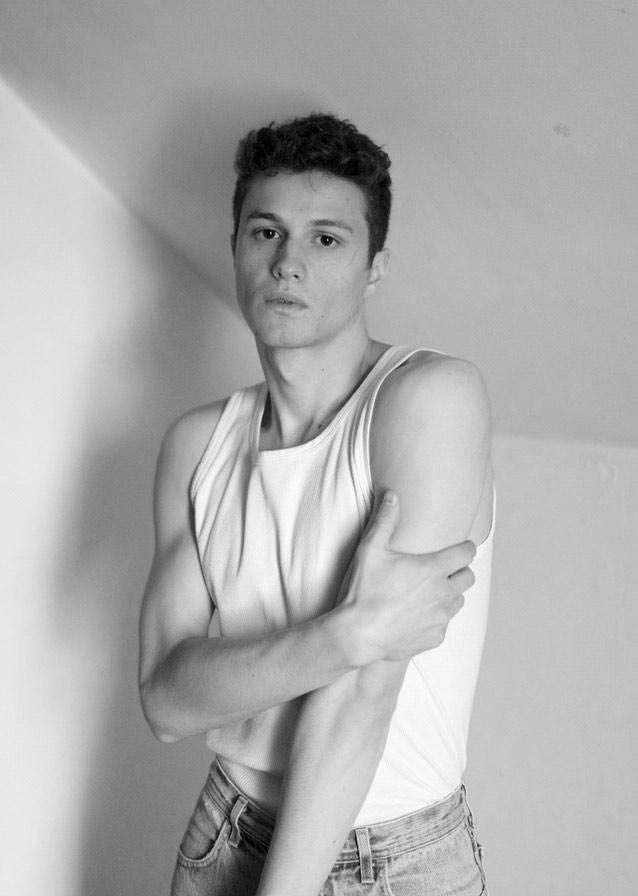
Yaimel López – Graphic Artist

This week I spoke to Cuban graphic artist Yaimel López, about the process of screen-printing, Cuban art, and the launch of his first art book.

At the time of this interview, Yaimel has been working as an artist for over ten years since graduating from design school in Cuba. He first worked in editorial design before landing a job at a Cuban magazine that produced political cartoons. Working alongside more experienced cartoonists, Yaimel says that he learned a lot from them both artistically, as well as in a narrative sense. He shared that “you have to be very smart in how you talk about things,” when creating these satirical cartoons, and that this style of layering meanings within the image itself has persisted into his current work. For Yaimel, “my work is never decorative. At least that’s not my main concern when I’m working”.

Screen-Printing

After moving to Canada with his wife, Yaimel continued to forge his own style, taking inspiration from many global influences, but naturally, also from his time in Cuba. He attributes his work to the stylized imagery of political graphics from the 60’s and 70’s, as well as the aforementioned cartoons that he worked on earlier in his career. Perhaps his strongest influence is the the strong screen-printing tradition in Cuba, rooted in bold colours and graphic designs. For those unfamiliar with screen-printing, this is a process in which a combination of mesh and stencils are used to either allow or block ink from reaching the printing surface. By applying multiple layers of this technique, an image can contain multiple colours, as well as more complex images. When Yaimel first came to Canada, his first job was working in a shop that screen-printed designs onto t-shirts. While he was there, he was speaking about his love for the medium when a coworker mentioned that he should get the supplies he needed online, and start making prints of his own. Yaimel sheepishly admitted that he didn’t realize that he could gather the necessary tools so easily in Canada, and he soonafter began working to print his original designs. It can certainly be a messy operation, and one of Yaimel’s biggest challenges starting out was convincing his wife to let him convert their washroom into a space in which he could clean and hang his used screens. As someone who has lived with six other people, I’ve definitely seen worse bathrooms.

Translating Photos Into Prints

As a professional artist, Yaimel says that he has worked on many books in the past for other clients and artists, but “I always had a dream to make my own book”. For his inaugural collection of prints, he took inspiration from a photo album his mother-in-law had found in a home she was working in. The pages of this album contained a series of original black and white photographs of Colombian and Venezuelan indigenous peoples taken during WWII. Yaimel was fascinated by these photos and began thinking about how to translate the story of not only how these people looked and dressed, but what they were thinking and doing in their day-to-day lives. One particular image that stuck out to him was a man making arrows. A dynamic composition, interesting layers, and the bold colours he loves all came together to make an image well-suited for screen-printing. For all of the images he produced, he essentially had to disassemble the photos into their distinct colours and forms, and then layer them back upon one another to compose the final images. After several months of designing and printing, he amassed a series of twenty prints for this book. As he had such a strong background in screen-printing, he tells me that his biggest struggle was not the prints themselves, but rather creating the cover of the book. Handmaking the cover proved much more difficult than he had thought, as even just finding a product that was strong, yet flexible enough was a task of its own. From there, he faced further challenges, experimenting with different measurements in order for it to align and close properly. You should judge a book by its cover if so much love has gone into making it.

Life as a Graphic Illustrator Artist

When Yaimel came to Canada, he initially had some difficulties finding work, but not due to any lack of talent. He shared that a barrier he faced was simply referring to himself as a graphic illustrator and not a graphic artist. In Cuba, clients focus on “if they connect with your work,” as opposed to the creator’s title itself, whereas in Canada, calling himself a graphic illustrator did not afford him as many opportunities as he had hoped for. Once he shifted his title to one of a graphic artist, Yaimel says that “people approached me in a very different way,” and he found himself booking more gigs, and having many more doors open for him. He is very excited to share the work from his new book, saying that immersing himself in the imagery and colours of Latin America helped him get through a turbulent year in the world. Yaimel shares that “maybe because I’m a Cuban, being far from my country, I need to connect” back to his memories of home, and that this book is a way to share these memories with others as well.

Follow Yaimel on Instagram, and check out his website to see his portfolio and new book.

Follow A Musing on Instagram for more content on Yaimel and the other creatives in this series.

And don’t forget to check our last interview with improviser and sketch comedian, Ronald Dario

-BF

Jasper Yiu – Commercial Artist

This week, I spoke with Jasper Yiu, a commercial artist specializing in watercolour paintings for food-related products. We spoke about her decision to leave a full-time job to pursue a career as an artist, her experience of growing an audience online, and what artistic qualities your pets share with your favourite meals.

Pursing a Career in the Arts

Unlike some of the other artists in this series, Jasper did not pursue an education in the arts, rather pursuing a degree in Computer Science from the University of Ottawa. This is not to say that Jasper is new to painting, as she revelled in the arts during her time in high school. However, she said that as she turned her attention towards post-secondary studies, “I just dropped art because I was insecure about my work”. After taking a few years away from art, she tried painting watercolours for the first time in her last semester of university, rekindling her desire to create more work and start an Instagram account to curate her paintings. Upon graduation, she accepted a position related to her studies in computer science. Jasper continued to build her portfolio in the hours outside of her day-job but eventually realized that “I was working in a job that I didn’t really like or enjoy”. As 2020 came to a close, she made the decision to leave her full-time job and move to Vancouver, picking up remote work to support herself while she continued to invest more time into her art.

Growing an Online Following

The first paying gigs Jasper landed were to paint pet portraits, and this work helped her build a following amongst private commissions. From there, she explored other accounts to see what similar artists were doing and realized that there was more commercial work available for food illustrators. It isn’t an accident that food is also one of her favourite subjects to cover, and her familiarity with the subject matter also helped her enter this field. Transitioning from painting animals to food, she said the variety of textures she has to realistically depict is a challenge in both fields, including wet noses and thick fur to crisp produce and soft dough. As she grew her online following, Jasper reaped the benefits of attracting a global audience, by booking editorial assignments from clients located in Malaysia to Belgium. The majority of her bookings came through her Instagram account, which started as “a visual diary,” and a means to collect her work, but soon became a major influence on the business she received. Despite this benefit, Jasper shared that the ecosystem of Instagram can make it “a bit harder to find your voice independent of what you “think might do well”” and find a balance of posting content that she enjoys with content that she hopes will draw high levels of engagement.

The Perks of Watercolours

When Jasper started using watercolours, she chose this medium simply because it was a low-barrier entry into the arts. Picking up a small travel watercolour set, this was a much more affordable, portable, and compact setup to work in compared to oil or acrylic painting. Something that has remained the same today is that Jasper only uses four to five base colours in all of her work. By starting with such a simple kit, she had to learn to manually mix any colour she needed as opposed to buying additional paints. Retrospectively, she said that “I think having a somewhat restricted palette has given me a better understanding of colour,” and a stronger foundation to apply new skills and tools. One noticeable upgrade Jasper has made is that “my brushes have gotten smaller and smaller” to allow her to be more refined and detailed in her work. Overall, she says that her style is more controlled than when she started, and this has helped her to more accurately portray real life in her own style.

A personal project Jasper has been working on is building a recipe journal, naturally complete with watercolour illustrations. She has been collaborating with different writers to contribute recipes to the collection, but she also mentioned that she also intends to leave many pages blank for the user to fill in as well. Being the architect behind a project like this comes with logistical challenges such as ironing out royalties for the writers, and getting the book into production, but she has been encouraged by the success she has had working in similar projects for other clients. Simply put, she believes that “what you put out there is what might come back to you,” so she is excited to realize her efforts into a finished project.

Jasper’s artistic evolution is by no means complete but she has found that the most rewarding aspect of this field is “finally getting to do what I really like to do”. She said that many of her friends and family were surprised that she didn’t pursue the arts in her post-secondary studies, and acknowledges that “I went on a detour but now I’m back on track”. No less than a year and a half ago she was working in a job that didn’t fulfill her, but she has quickly pivoted and built a following of over 7,500 followers on Instagram. I look forward to the day when this figure is embarrassingly out of date.

To take a look at Jasper’s work make sure to follow her on Instagram and check out her online portfolio. I would advise you to avoid browsing in between meals.

Follow A Musing on Instagram for more content on Jasper and the other creatives in this series.

And don’t forget to check our last interview with painter, illustrator, and muralist, Ciele Beau.

-BF

Ciele Beau – Painter, Illustrator, & Muralist

This week I spoke to artist, Ciele Beau about a busy year of mural-painting and the fascinating ways she uses synesthesia to create truly original art.

Ciele’s journey as a professional artist began by completing a Bachelor of Fine Arts degree at The University of Victoria in 2013, earning a major in Visual Arts and a minor in Art History. After receiving her degree, she moved to Vancouver and spent the next seven years building up her portfolio in the evenings and on weekends, while she worked day jobs to support herself. By 2015, she had started doing more freelance work, and while these jobs often didn’t pay well, she says that each one was a valuable learning experience to get better as an artist. As a freelancer, design jobs were often more easily available than illustrative jobs, and she soon found that she had reached the limit of what she could teach herself. Ciele decided to continue her education at the Emily Carr University of Art and Design in 2017, earning a certificate in Design to supplement the more traditional training she had received from her former degree. With her foundation solidified, Ciele transitioned to becoming a full-time artist in 2018 and began holding her own solo shows, featuring in part, work inspired by and created with synesthesia.

Synesthesia Art

While studying in Victoria, Ciele was tasked with an assignment in which she had to create a painting inspired by a song. She picked “Pro Nails“, by Kid Sister as her song, and ended up painting a piece that she describes as “this crazy mess of just shapes and colour,” but something that reflected her feelings when listening to the song. While certainly abstract to the uneducated blog writer, Ciele said that experiencing this array of visual stimulation was and still is very normal to her when she listens to music. However, this experience proved difficult to explain to the other students in her class. During the class critique of their work, Ciele said that “I was so proud of it, but nobody got it,” as many others fell back on painting literal representations of their songs’ subject matter. Later that year, Ciele was approached by one of her peers who had learned about synesthesia, and had been reminded of her painting. At the time, Ciele didn’t know what synesthesia was, but after doing some research she realized that she had been living with it all her life. In fact, she realized she has multiple forms of synesthesia, but for the purposes of her art, she focuses on colour synesthesia. For Ciele, this means that when she listens to music, she feels colour, “kind of the same way that you would feel emotion…on a chemical level”. This feeling manifests as tangible colours and shapes that she is able to translate into two main approaches to synesthesia art, colour frequencies and chromatic forms.

Beginning with colour frequencies, this is a method in which she translates sheet music into a grid pattern filled with the colours that she feels when she listens to the song. This creates a visual blueprint of the song, featuring a specific range of colours and palette arranged in time with the music. Of course, it would be an oversimplification to describe it as simply a grid, but the end result spans the entire song with different line weights to correspond with the varying notes in the song. Conversely, chromatic forms are an opportunity to translate both the colour as well as the shapes she feels, creating a piece with more movement and less structure than when working in colour frequencies. This results in a product with more fluidity and represents the song in a visually different way than the former technique. When she first starting using synesthesia in her work, Ciele would listen to whichever song she was working with until she was finished with the piece. She says that this became quite overwhelming on a sensory level, as well as the basic fatigue that will come when listening to any song for that long. She has since refined her workflow; when creating a colour frequency piece she will listen to it only until she is able to create a colour palette for the song. From there she is able to use that palette to create her grid, without needing to listen to the song live for the entire process. Similarly, her current technique for chromatic forms is to listen to the song until she creates a sketch of the painting to serve as the plan for her piece. This also serves as a starting point from which she can continue her work without relying on the song. Looking back at how her workflow has changed, Ciele says that when creating her piece in university, “I remember kind of going a little bit insane” listening to the song for that long, so she is certainly happy to have developed a more sustainable practice.

Mural-Painting

This past year was an exciting year for Ciele as she was able to complete several murals, something she had not had the opportunity to do so before. In the past, she had found it difficult to gain experience in large murals due to the difficulty of finding clients with enough trust to allow her to cover an entire wall, as well as the corresponding funds for the volume of paint necessary to complete it. But in the spring of 2020, Ciele received an opportunity as businesses began boarding up their storefronts as the lockdown in Vancouver began to take full effect. She was approached by the Gastown Business Improvement Society to paint a mural on a storefront, with the caveat that it would be unpaid work. While this deterred some artists, Ciele saw an opportunity to gain mural experience, but also create a piece unfettered from any restrictions from the client. Inspired by the proliferation of blue medical gloves in our world, she painted a blue hand taking a bath, reflecting her affinity to “add a little bit of humour” to her work. From the success of this mural, Ciele was selected to be part of the “Make Art While Apart” initiative from the Vancouver Mural Festival, taking her talents to decorate the South Granville area. For this installation, she painted a blue alien covered in Cheeto dust, featuring the quote “You’re doing amazing Sweetie,” from Keeping Up with the Kardashians lore. A classical pairing of imagery and messaging. Finally, Ciele earned a spot in the Vancouver Mural Festival’s installation in the River District, during the run of the festival itself. She painted a girl with bright blue skin, flanked by two coffee cups and the words “Wake Up!” across the entire piece. Every artist has a blue period right? Ciele says that this last mural has two meanings behind it, with the obvious one being caffeine’s place in our morning rituals. But in addition, she wanted to reflect on the social movements that heavily defined 2020, and comment on the world awakening from “that unconscious sort of slumber that people have been in”.

Ciele says that the number of resources and knowledge on synesthesia is vastly different compared to when she began exploring it back in art school. Now that she understands what is happening, she has been able to harness it and further expand her breadth as a creative. Reflecting on her path to a full-time artist, even though she fully committed to life as an artist just a few years ago, the years leading up to it, along with now living with a partner in the music industry have created a “creative, isolated bubble” in which she has lived in for quite a while. And with the bubbles playing such a large role in our lives over the past year, wouldn’t you want yours to be a little bit more artistic as well?

Check out more of Ciele’s work on her website, and follow her on Instagram and Facebook for more content. She has several exciting upcoming projects that I won’t share just yet, so stay tuned!

Follow A Musing on Instagram for more content on Ciele and the other creatives in this series.

And don’t forget to check our last interview with creative, Nadine Nevitt.

-BF.

Nadine Nevitt – Creative

This week I spoke to Nadine Nevitt, an artist with hands in textile design, art direction, photography and a whole lot more. We discussed her strategies behind designing in different mediums, her inclusion in the Vancouver Mural Festival, and why pineapples are suitable for all ages.

Working in Textile Design

Nadine grew up in rural Ontario and in a way, pursuing an artistic career was continuing in the family business. Her father was an art professor at Ontario College of Art & Design and her mother taught art in primary school. If you ask me, it’s tough to say who had the more challenging student body. Surrounded by art from a young age, Nadine describes family trips to galleries, museums, and spending her formative years exploring many creative endeavours. Despite also being attracted to the sciences and music, she decided to attend Ryerson University and earn a Bachelor of Design with a specialization in Fashion Communication. With a curriculum including pattern drafting, sewing, photography and over four-hundred hours of an applied co-op, she says that navigating through the multi-disciplinary program really helped her create a diverse skillset alongside an equally diverse range of artists. Based on their professions, I would assume that Nadine’s parents would agree with her belief that “any learning is good learning;” she has recently been upskilling her studio lighting and portraiture chops at Langara College.

Upon graduating from Ryerson, she entered an economy in the middle of a recession, spurring her to “always say yes to all opportunities” presented to her. Her first position following her graduation was at Joe Fresh, where she was tasked with creating graphic and colour print patterns for their clothes and homeware. She spoke very highly of the senior graphic designers who helped mentor her there, but after her time at Joe Fresh, Nadine joined Lululemon, to help build their Ivviva line of girlswear. As a result of accepting this position, she moved from Ontario out to Vancouver in 2012 and worked with Lululemon for five years (but has stayed on the West Coast ever since). She describes her time there as a full-circle experience reflective of her multi-disciplinary education, beginning in concept design for prints and then moving to marketing roles in art direction and product photography. Nadine also started her own business five years ago, and now designs her own products, as well as working to support a wide range of clients.

The Vancouver Mural Festival and Art Direction

Nadine has completed three murals in Vancouver, for Turf, Adrenaline Tattoo, and most recently, Breakfast Table in collaboration with the 2020 Vancouver Mural Festival. Working on such a larger scale than her normal work presents a unique set of challenges, so “going in with optimism is really helpful,” as is giving herself some extra time to get it done. For this latest mural, she took a print that she had originally designed for a sweater and applied it to the front of the restaurant. Having a mural in such a heavily-travelled space was a special opportunity for her, as was the chance to permanently add some art to her own neighbourhood. Nadine also spoke of the physical toll that a large mural requires, saying that between climbing ladders, moving equipment, and covering such a large area, “I think I only have a mural in me a year if that”. However, this project also presented an added bonus of chatting with passersby throughout the process of finishing the mural, and Nadine says that the positive energy and feedback she received certainly helped motivate her along the way.

In addition to leading her own work, Nadine also works in art direction, collaborating with other designers and artists. She has had a longstanding relationship with Shop DYI in Texas and says that “sometimes it’s refreshing to step in halfway or towards the end of the process,” to offer a fresh second thought, as opposed to being involved from the very beginning. Regardless of when she joins a project, Nadine says that constant communication between herself, her team, and the client is paramount to achieving the best possible outcome. Expanding on this, she adds that “it’s always magical seeing a set of four or five people, all different and really amazing creatives come together” to bring something to life. This work also serves to keep her engaged and refreshed as she can move between several different projects in one day.

Designing Across Mediums

Textiles and murals only represent a small portion of the mediums in which Nadine works, and she explains that scale, material, and client are just a few factors that must be considered before diving into a project. For example, to the uneducated blog writer, it would be easy to overlook whether the design will stretch when the user is moving or whether a waterproof finish would affect the image. Textiles are especially exciting to Nadine as “there’s always an extra element of who’s wearing it, or what kind of fabric it’s going on, and how it’s being styled”. In this way, her art is interactive and personal to the user in a way that other forms don’t necessarily offer. The same piece can be worn in many different ways, granting her designs the ability to cross demographics, cultures, and individuals themselves and have a “completely different life”. As an example of this life, she told me a story in which she was asked to design a sweater with a pineapple image for a Japanese clothing company. Originally she thought it was for a children’s collection, but she had to pivot her design when she learned that it was actually intended for professional businesswomen. Nadine was part of an international group of designers who worked on this line, and she was eventually invited to Japan to promote the products in the stores in which they were being sold. As part of their promotional campaign, Nadine was asked to take commission requests from customers, drawing portraits of their pets or whatever else they could think of. She remarked that “their appreciation for art and the exchange,” of dog drawings across a language barrier was a bizarre but extremely fulfilling experience for her. Travelling to see her work in its natural habitat is something Nadine looks forward to getting back to, as she says that “sharing [art] is the best part whether it lives in a house or on a body. I think any artists would say that”.

To keep up to date with Nadine’s work, follow her on Instagram, and check out her website to browse her portfolio. Amongst other products, she currently has a line of notebooks available, but reach out to her if you are interested in commissioning some custom prints for apparel or other products.

Follow A Musing on Instagram for more content on Nadine and the other creatives in this series.

And don’t forget to check our last interview with Food Waste Recovery Coordinator, Martin Field.

-BF.

Alyssa Hirose – Comic Artist

This week I spoke to comic artist, writer, and improviser Alyssa Hirose about the everlasting value of greeting cards, the secrets behind a good interview, and how to win a fight protect your artistic property in the digital age.

Writing with Comedy

Alyssa’s portfolio is incredibly diverse, but I’ll try to hit all the major stops in a semi-coherent way. Beginning with her career as a writer, she began writing as a hobby in high school but started writing with more intention when she applied to the Creative Writing program at The University of British Columbia. In her application, she included a poem titled “Rhinocerous Preposterous,” a story centred on a kid who can’t get out of bed because there is a rhinoceros sitting on him. Classic imagery. This poem was one of the pieces that got her accepted into the program, and she eventually gave it new life by turning it into a zine to enter the Vancouver Comic Art Festival. Along with some other zines, she ended up selling some of her work at the festival, marking the first time that this had happened in her writing career. While studying at UBC, she also earned an internship to write for Vancouver Magazine, a publication where she now serves as an assistant editor.

Much of the work Alyssa does for Vancouver Magazine are arts and culture pieces where she interviews chefs, playwrights, or other individuals making contributions to Vancouver’s arts community. Kind of like this, but better. She says that to get the most exciting and relevant content out of an interview, “I really like to talk about what the person I’m interviewing wants to talk about” instead of keeping to a tight gameplan. As a result of conducting regular interviews in her work, Alyssa has also found that “I have definitely gotten a lot better at asking the important questions,” to work more efficiently and allow her to focus on the articles themselves, rather than the interview. Her favourite pieces are the ones where she can incorporate comedy in some way, with some standouts including “5 Things I Hate About Tacofino Kitsilano” and “6 Things Men Really Need for Christmas,” the latter of which naturally opens with a description of a Manzilian Wax. The piece on Tacofino makes no such mention of male grooming. You can also find her work in Western Living, and on Instagram under @hialyssacomics where she releases new comics every day.

Writing for Comics and Greeting Cards

For Alyssa, the biggest difference between writing for magazines and writing for her comics is that the latter serves as “a way to relax and sort of wind down,” and space where she allows herself to be less critical of herself. Since May 22, 2018, she has posted comics every day, amazingly without the safety net of a backlog to protect against writer’s block. The inspiration behind them really comes from anywhere, with some of my recent favourites covering the holidays, political updates from our neighbours to the South, or even interviews she had with amateur bloggers. When she started her Instagram account, she would upload pictures of her hand-drawn black and white comics, but she has since moved to a digital sketchbook, traversing many themes, colours, and structures over the last three years. Ironically, keeping up such a consistent content calendar has only been difficult for Alyssa when she receives especially high engagement or appreciation on a post. When this happens, she shared that she can feel the pressure to uphold such metrics on her next post, before reminding herself that “at the end of the day, I can do comics that are bad”. Not that I’ve seen any of these reportedly bad ones.

At the end of 2020, Alyssa began making greeting cards featuring her comics to sell on Etsy. This stemmed from a long-held fondness for greeting cards that Alyssa has had since childhood. She shared that her mother would let her stay in the greeting card aisle while grocery shopping, and that greeting cards were a big influence on her style of comedy. We had an unexpectedly poignant discussion on the cultural impact greeting cards play in our lives, with Alyssa arguing that “it’s an old form of art that we haven’t really found a replacement for yet,” which I can’t help but agree with. Don’t you dare bring up e-vites.

Fistful of Kicks

The last involvement we discussed was Alyssa’s work with Fistful of Kicks, an improv team of Asian-Canadian performers. Alyssa began performing improv by joining the UBC Improv team in her fourth year of studies and consequently auditioned for Fistful of Kicks the following year. Finding such a group was a welcome opportunity in an improv community that is not necessarily known for its diversity amongst its teams. Expanding on the notion of diversity, Alyssa said that it would be a mistake to generalize all of her fellow performers in Fistful of Kicks under the brush of being simply Asian-Canadian, as they are all coming with their own experiences and upbringings. However, it’s been really enjoyable for her to perform with a group that shares similar values and sensibilities when it comes to comedy. Due to COVID-19, she hasn’t performed with them in a while, and is excited for a reunion; Alyssa says that “it’s a shame that we can’t fake kick each other’s asses right now, but I hope we can do it soon”.

With experience in so many different disciplines, Alyssa shared that when she hears feedback on her work, she takes it to heart perhaps more than a “traditional” artist is supposed to. She acknowledges that the common train of thought is that “you’re not supposed to care what other people say, but it’s impossible not to care what other people say,” whether it is positive or negative. Luckily for her, but by no means an accident, the feedback she gets from her work has been overwhelmingly positive and has been a real source of energy and drive to keep up her schedule. However, positive reception and fandom on the internet are not without drawbacks.

How to Win a Flame War

A couple of months ago, it came to Alyssa’s attention that one of her comics had been reposted on a meme account, but not before removing her watermark and posting it without any attribution. She said that at first, she didn’t pay it much mind, but when she saw that the account had tens of thousands of followers, with the repost aggregating thousands of likes of its own, it started to gain more traction and scrutiny from her own friends. They began flooding the comments of the post, asking the owner of the account to not necessarily delete the post, but to at least credit Alyssa for her work. Upon receiving this constructive criticism, the account responded in the only way online disagreements are settled and began deleting the comments as soon as they were coming in. At this point, Alyssa realized that “oh, we’re in a flame war,” and she started messaging the account herself, asking them to tag her in the post. Waves of comments from her friends continued to pour in, and Alyssa eventually asked that they delete the post itself when they refused to tag her in it. Ultimately, the account finally deleted the post and replied to her, with a hollow line of petty defeat, “I deleted it, you bloody bitch”. Now that is how you have a peaceful transfer of power.

Follow @hialyssacomics to keep up with her daily comics, @alyssa_hirose for more personal content, and remember to use her Etsy shop for all your greeting card needs. Also, check out Vancouver Magazine and Western Living to see the entire backlog of Alyssa’s articles, and to keep up with what is going on in our city.

Follow A Musing on Facebook and Instagram for more content on Alyssa and the other creatives in this series.

And don’t forget to check out last week’s interview with musician, Eric Tsang.

-BF

Cory Ransom – Motion Graphics Designer

Cory Ransom - Motion Graphics Designer

This week I spoke to motion graphics designer, video editor and photographer, Cory Ransom about his twenty years of experience working in the creative industry, capturing the emotion of the 2010 Winter Olympics, and improving the accessibility of photography.

Starting in Skateboarding

Cory describes himself as a “specialist generalist,” due to his varied experience in different disciplines. His mother was a secretary at an elementary school, and in the summers she would bring home the school’s video camera for Cory to experiment with. Taking advantage of a strong media arts program at his high school, he had inklings of pursuing filmmaking in university but instead decided to study computer science. However, Cory returned to filmmaking through his love of skateboarding and ultimately decided to drop out of university. Living in Toronto with some friends who were strong skateboarders, he said that you “either pick up a stills camera, or you pick a video camera,” and he chose the latter option to create content for his friends.

His big break into more stable work was a chance meeting with a stranger on the street, who saw his camera and then asked if he also edited videos in addition to filming. After a short chat, Cory was promptly asked if he was interested in an editing position, which yes, is the kind of situation that will open many feel-good Christmas movies this upcoming December. Cory successfully earned the position and began work as an editor in 1998, tasked with creating corporate videos on the first edition of Final Cut Pro. While not the most creatively challenging or diverse content, he says that working in corporate media provided a strong foundation for him to build upon later in his career. He describes the repetitive nature of his day-to-day work as “working up that muscle memory,” becoming more efficient in his workflow and adding layers to his skill set as an editor. When I asked him what has changed the most in his twenty years of experience, he did not hesitate to say the opportunities and tools that technology now provide. Let it be known to all new editors that the original Final Cut Pro may have some limitations in its core features.

Creating the Look of the Olympic Games

In 2007, Cory moved to Vancouver when his girlfriend, and now wife Laura, began to work for the 2010 Winter Olympic games. On her first day of work as a brand marketer, she was asked if she knew any video editors to join their team. Several rounds of interviews later, Cory joined as a video coordinator and editor. This was also his entry into motion graphics, a discipline that he defines as “moving elements of design from point A to point B in order to communicate something more than just the design itself”. Cory says that his background in video editing and the associated software was invaluable to learn motion graphics quickly, and he played many roles in this team ranging from camera operation to conducting interviews for documentary pieces. He admits that “with kids now I don’t think I have the energy to do that kind of intense work,” again, but cites this experience as one of the highlights of his career. His favourite memories include getting to be in the stands for the men’s gold medal hockey game, capturing the raw energy of stadiums full of fans, and being a part of a team that orchestrated the look of a truly global spectacle.

Following the games, Cory began tenures working for EA, The University of British Columbia, and Disney before eventually launching his own company. When I asked him what the biggest challenges were creating content for such wide demographics, he said that no matter the target audience, his role as a motion graphics designer is “trying to break really complex ideas down into really simple, digestible things”. For him, creating intuitive branding that is recognizable from the moment you see it trumps any elaborate technical work that may lose the core message of the brand.

Craft Beer Product Photography

Cory is in the third year of working for himself, saying that “I’m lucky enough that all my stuff comes from word of mouth,” or from his portfolio on Instagram. The latter is where I first saw his work, manifesting not through motion graphics or video, but rather as stylized product photography with local craft breweries. Cory’s entry into product photography began at the Olympics when he did some work showcasing the artwork adorning the faces of the medals. Now living in the Okanagan, he had a friend who connected him to some local wineries who also needed some shots for sale sheets and their website. From there, beer feels like a natural progression; Cory says that “I like to jump in and out of different styles,” and the seemingly limitless designs and branding behind craft beer keep him creatively engaged and always trying out new ideas. Sometimes he takes inspiration from the can itself and builds the scene around it, whereas other ideas can hibernate in his mind until he comes across the perfect can.

In addition to the polished photos themselves, one of Cory’s favourite aspects of this series is getting to know the local community of other beer photographers, marketers, and of course, drinkers. In response to the positive reception he has received, Cory began uploading behind-the-scenes footage of his shots to provide a platform to help other photographers shooting similar content. While he was working in a corporate setting, Cory says that there was an element of education and mentorship that he doesn’t get to engage with as much anymore, now that he works for himself. By breaking down how he sets up his shots, he hopes to show that “anyone can do this stuff,” and that photography is not as inaccessible as it may seem. While he doesn’t generate much revenue from this side project, this venture also feeds Cory’s thirst for creative exploration when he is unable to find clients willing to take more creative liberties with their product photography. Expanding on this struggle, he shares that “some of the shots take me two or three hours to do,” and there can be a disconnect between the time needed to achieve a strong end product and the funds that companies are willing to put into an ultimately disposable piece of online content. However, working for himself has allowed Cory to bounce between different projects with greater variety, working with different brands at a rate that “it’s hard to get bored”.

Despite his wide range of experience, and longevity in the field, Cory shares that “I don’t think I’ll ever know exactly 100% if I’m, you know, truly professional”. He attributes this to his undying desire to learn new skills, adopt new technologies as they present themselves, and an “insatiable need to feed that technical side of my brain”. This continues to drive him to reverse engineer content whether it is in motion graphics, videography, or photography, in an attempt to break it down into a simpler, digestible form. This similarly echoes the earlier definition of motion graphics that he provided me, which I think ties a very nice bow to the end of this article.

If you’re feeling thirsty, follow Cory on Instagram for his series of craft beer product photography, as well as behind-the-scenes breakdowns of his shots. There are some remarkable photos on his feed, some of my personal favourites feature cobwebs, giants, and an example of the limitless uses of good old poster paper.

Follow A Musing on Facebook and Instagram for more content on Cory and the other creatives in this series.

And don’t forget to check out the last interview with comedian, Katie-Ellen Humphries.

-BF

Lay Hoon Ho – Artist

Lay Hoon Ho - Artist

This week I spoke to artist Lay Hoon Ho (Arty Guava) about building giant kaleidoscopes, how to make art accessible to children and her recent inclusion in the Vancouver Mural Festival.

OtherHalf Studio : Big Ideas and Bigger Kaleidoscopes

Working professionally as a graphic designer, Lay Hoon is always around art but found the need to balance her corporate projects with her personal work. To satisfy this she decided to co-found an art collective four years ago with photographer Su May Cheah, titled OtherHalf Studio. The inspiration behind this collective was pulled from Lay Hoon’s own life. As a mother, she felt that traditional avenues of enjoying art were quite inaccessible for parents with young children. Quiet museums, static exhibits and no-touch policies are naturally adversarial to the common behaviour of most children and can induce an undue amount of stress on their parents. Lay Hoon decided to create immersive, interactive experiences designed to appeal to the whole family, while also allowing young children to gain an early appreciation for art. The first installation she created was a giant, ten-foot-long kaleidoscope for an art festival in Malaysia. Lay-Hoon is Peranakan, a term that encompasses individuals coming from a mixture of Chinese and Malaysian cultures. She wanted to incorporate this into her piece, so she used traditional patterns and motifs to adorn the exterior of the exhibit, and celebrate her cultural heritage. She admits that there was certainly some trial and error working on this project, but eventually, she was able to create an entirely new experience for families to enjoy.

Her next kaleidoscope was for the Asian Civilization Museum in Singapore. The museum had struggled with generating engagement from younger audiences and had challenged Lay Hoon to incorporate their existing exhibits into her own piece. She achieved this by using images of the artifacts in the visual projections of the kaleidoscope, creating an environment that she describes as most definitely, “Instagrammable” for the visitors. One of the philosophies behind OtherHalf Studio is to “transport people to a place where they can just enjoy art and relax”. Integrating additional music and video projections into this piece was another way for her to do so in this installation, reinforcing the truly immersive nature of her work. Lay Hoon says that the key to creating art that appeals to younger generations is to incorporate movement and sound to help distinguish her work from the pre-conceived notion of stuffy museum exhibits. These factors also help rewrite the traditional rules of what art can be, making them fresh and memorable for audiences regardless of their age.

ArtyGuava’s Debut at the Vancouver Mural Festival

Lay Hoon’s latest project began at the advent of COVID-19. She had moved to Vancouver two years ago, and the sudden restrictive lifestyle that came with quarantine amplified prior feelings of homesickness. To help get through this she decided to illustrate “sunshine, tropical fruit or [other] memories of home” to take her mind off the current situation and serve as a visual journal. (If you haven’t figured it out, guava is definitely her favourite fruit). This series is different than her usual work both in style and workflow. Working within a specific theme was a shift from her usual art, as she was more accustomed to working on individual pieces in watercolours or realism. As for the style, she decided to move away from realism, shifting to depicting feelings and emotions as opposed to focussing on realistic proportions and shading. Holistically, Lay Hoon decided that “I needed to draw something that will make me happy” when she began this series. It turned out that it made a lot of her followers happy as well, and she has continued to grow this theme through today.

As her Instagram following grew, Lay Hoon met fellow artist Carmen Chan, who had previously earned a selection at the Vancouver Mural Festival. With Carmen’s encouragement, Lay Hoon decided to apply to the festival this year and was selected to make her first appearance. While she was not familiar with translating her illustrations to such a large scale, her experience creating giant kaleidoscopes certainly helped her visualize this piece. Titled, “Dance With Me,” her mural depicts a group of women dancing together at an outdoor party, surrounded by colorful flora, fauna, and of course, fruit. Describing the essence of her mural, she says that despite our current circumstances “I wanted to show that one day we can celebrate together again,” and revel in the care-free company that we previously enjoyed. “Dance With Me” is currently on display in the River District Crossing alongside several other murals curated for this year’s Vancouver Mural Festival.

Despite her busy professional and personal schedules, Lay Hoon says that “when I’m doing art it’s not really work,” and often finds herself accidentally working late into the night. Looking back on her career so far, she said that even with such a varied portfolio, no particular project stood above the rest. To Lay Hoon, “every little project is precious,” but she also acknowledges that a key to maintaining her high level of production is to be able to look ahead to the next project as she is wrapping up another. For her, the most rewarding part of her work has been hearing the positive reception that visitors have experienced when interacting with her art. She shared one story in which she was working on the back of one of her kaleidoscopes as it was on display. Hidden from view, she was able to hear positive reactions to her work from visitors as they passed, which was especially nice since “they’re not trying to praise you or say nice things to your face”. Hearing the immediate and unfiltered positive reactions to her work affirmed all of the time and effort Lay Hoon put in while setting it up, and continues to be a driving source of motivation today.

To keep up with Lay Hoon’s work make sure to follow Arty Guava on Instagram, and check out her website to see her complete portfolio. “Dance With Me” is on display at the River District Crossing, so head there to see it in person, alongside new murals from other local and international artists. Finally, to bring a fresh piece of Arty Guava home with you, head to Lay Hoon’s Society6 page to browse work of all sizes, shapes and mediums. If you’re going to be staring at your wall all day anyway, you might as well be looking at something beautiful. Check it out!

Follow A Musing on Facebook and Instagram for more content on Lay Hoon and the other creatives in this series.

Don’t forget to check out last week’s interview with filmmaker, Godfrey Cheng.

-BF

Godfrey Cheng – Filmmaker

This week I spoke with filmmaker, Godfrey Cheng about the beautiful permanence of film, the experience of being fired while on tour, and his new documentary covering the horrors of the palm oil industry, In Your Palm.

Godfrey’s passion for filmmaking began in elementary school as he was an early adopter of a content calendar, producing videos every Monday to share with his class. Experimenting with vlogs, unboxing videos, and gaming videos, Godfrey says that this wide range of exploration came from a challenge he put on himself “to see what you can make out of nothing”. (The unofficial mantra of university students looking in their fridge). For one particular assignment, he was tasked with documenting something that was important to him. He chose to film a series of comedic shorts with his grandmother, and while trivial at the time, in hindsight, he says that just “having that in my hard drive is something very important to me”. The importance of documentation became a recurring source of motivation for Godfrey and naturally led him to explore documentaries as a means to do so.

Getting Fired Up On Tour

Godfrey continued to make videos through his post-secondary studies at The University of British Columbia and began growing his network of clients through working with various organizations on campus. He also started cold-calling artists and other performers to gain more experience, eventually earning an opportunity to tour with singer and producer, William Singe. With the potential for over a million Instagram followers to see his footage, this was a massive opportunity for Godfrey, and he describes feeling incredibly anxious leading up to his flight to join the North American tour. Unfortunately, from the onset of the tour, he struggled to gain his footing or establish a rhythm, collecting passable footage but not performing up to the level that he thought he was capable of. Complications continued, and after three months he was ultimately fired from the position and was asked to return home. Godfrey struggled to identify what led to this collapse, wondering whether he wasn’t ready for the job, if he took the wrong approach, and even if he had a future in this industry. To give his mind a break he took up a job at White Spot, a job that while not fulfilling, reignited his passion for filmmaking. This interim period motivated Godfrey to improve his current skill set, gain some more experience and be ready for when the next big opportunity crossed his path.

Wedding Filmmaking

Part of his reinvention was working in the wedding industry, which he describes as a great place to “lock onto the basics” of filmmaking. Working within a finite time frame with essential moments to capture, Godfrey explains that in order to succeed, a wedding filmmaker’s technical skillset must also be met with the physical requirements of event videography. Throughout a wedding “you’re constantly on your feet, you’re tired, your legs are burning,” but you have to deliver your best work on arguably the most important day of a couple’s life. However, not one to get lost in the grandeur, Godfrey adds that over the course of a wedding season “you do have moments where you cringe but you pretend everything is alright”. Save it for the honeymoon folks. Perhaps the most important wedding he worked on was his own sister’s wedding, which he said felt like the culmination of every wedding he had done before. Once his edit was finished, watching her “being super emotional about seeing my work,” was a big affirmation that he had made the right choice to continue in the industry. (This is in no way meant to slander White Spot, count me in for a Legendary combo any day). Godfrey eventually decided to leave the world of wedding filmmaking but says that the hands-on experience he gained was invaluable to his career, as well as providing much-needed funds to upgrade his gear.

In Your Palm and Documentary Filmmaking

Due to the increased quality in his work, “collectively I started getting a lot of gigs from friends of friends,” covering subjects and genres that consistently challenged him. One of these connections was documentarian Carter Kirilenko, who saw Godfrey’s work and consequently offered him a gig working on a new project. This film, now titled In Your Palm, covered the dangerous and damaging palm oil industry of Indonesia. Breaching topics including deforestation, poaching, human rights violations, and global ramifications, this was an incredibly complex subject to capture. Much of this film was shot on location in Indonesia, and prior to boarding his flight Godfrey’s perception of this shoot was filled with dreams of helicopter rides, beautiful remote locations and the National Geographic documentaries he grew up with. However, he says “the reality is, you get food poisoning. You sweat all day because it’s so fucking hot,” and that it was an incredibly gruelling three weeks of shooting on location. Simply breathing was an issue due to the poor air quality; the crew had to wear protective masks all day which compounded the already incredible levels of heat and humidity. Please try to complain about wearing masks in Vancouver. But despite these hardships, Godfrey says that the satisfaction of being able to execute on his vision was extremely fulfilling, and even vindicating of his former struggles as a filmmaker. Carter and Godfrey ended up gathering enough footage to make two documentaries; In Your Palm is currently in its festival run, with a second film covering the Mount Leuser National Park coming out at the end of the year.

As mentioned before, Godfrey’s passion for documentaries came from his belief that “the power of film can ultimately create an effect” on the world, and that this medium is one of the most effective and engaging ways to educate an audience. Reminiscing on a project that stood out to him, Godfrey recalls another short film he made with his grandmother in his third year of university. As she was entering her last few weeks of life, Godfrey captured conversations and thoughts she had on those she loved, taking on a much different tone than the comedic shorts he made with her in high school. This footage was invaluable to Godfrey’s relatives who were unable to travel to Vancouver at the time, as well as those who were not fluent in Chinese, his grandmother’s native language. Once again, Godfrey views the timeless permanence of film as a gift, saying that there is something truly special about having memories “you get to look back on whenever you want”.

In Your Palm is currently screening at the Toronto International Film Festival and will soon be available for streaming, with Leuser: The Last Place on Earth making its debut at the end of the year. For more on Godfrey, follow him on Instagram for updates on these projects, and much more to come.

Follow A Musing on Facebook and Instagram for more content on Godfrey and the other creatives in this series.

Don’t forget to check out last week’s interview with artist, Aidan Shamray.

-BF

Aidan Shamray – Artist

Aidan Shamray - Artist

This week I speak to artist Aidan Shamray about defining the differences between singles and albums, the impact visuals can have on a song, and the release of his new single, “Blue”.

While he has been releasing music at a furious rate as of late, Aidan has been producing for over 4 years. Looking back on his first tracks, he says that while the arrangements were not his best, he can still relate to the excitement and passion he felt as a new artist. Starting out, he felt confident sharing the lyrics, arrangements and mixes he had created but was much more nervous regarding the music videos he produced to accompany them. For him, performing on camera was “the first time expressing myself in such a direct way,” and felt much more vulnerable than a purely aural experience. To complement his performances, Aidan integrates different visual elements and he says that it has been a great learning experience to become more comfortable with the tools he has at his disposal. There was initially a greater disparity between his music and filmmaking skillsets, but he feels that he has closed this gap through repetition and practice. He also doesn’t separate these two worlds, rather he considers the visual experience an extension of the music, letting the music influence visual aspects such as subject matter and colour palettes.

The Benefits of Releasing Singles Over Albums

Aidan’s recent releases have all been singles, and when I asked him whether he had considered combining them into an album, he expressed his indecision on what qualities define an album. He said that as someone who has released albums in the past, “I struggle with if an album necessarily needs to have a consistent sonic cohesion amongst it” to hold it together, or if it may contain songs with no apparent similarities between them. If the answer to the former question is yes, then he would not consider his recent singles as part of a bigger album due to the varying stylistic differences between them. Moreover, he has found that the labour cost is significantly higher to create an entire album than it is for a single. In a social environment in which attention spans are at an all-time low, Aidan feels that you need to have “really thought about how you’re going to sustain interest in it,” in order to justify the investment of time, funds, and marketing efforts to create an album. For him, singles “allow me to challenge myself and do different things every single time,” granting him the freedom to cross genres and styles in a way he wouldn’t necessarily have within a traditional album.

On September 25th, Aidan is releasing “Blue,” the next single in his discography. “Blue” is a ballad he has been tinkering with for a while; he had written it several months before, but struggled to find the complementary parts to build around the main guitar line. Taking some time away from this song proved fruitful to breathe new life into it, and he expressed that “I love how so much of music is recycling” old ideas into new ones. Aidan also says that “Blue” is a snapshot of the struggle to “make the right choice not only for myself but for people that enjoy what I do;” a balance that affects artists in any discipline. Aidan says that this internal back and forth can result in delayed release dates, or deter him from releasing more experimental work, but is still part of the creative process that ultimately helps appease both himself and his listeners.

The Workflow of a Solo Artist

When it comes to writing the lyrics to performing the arrangments, mixing the recordings and finally creating the accompanying visuals, Aidan has largely been the sole architect of his creative body of work. While he says he is certainly open to writing or producing for another artist, at this point he isn’t sure if he could work with another lyricist or musician on his own projects. He explains that “so much of what I come up with is just me mumbling and then figuring it out,” that it would be difficult to integrate another artist into his usual workflow. However, he adds that “I can definitely admire other people’s skills,” when dreaming up bigger projects or developing more complex visuals, and by no means has Aidan written himself off as completely a solo act.

Reflecting on the past four years, Aidan says that “I feel like I’m always creating,” regardless of whether he has been releasing music on a consistent basis. He has refined his workflow to the point where he can now release new music with regularity, something that used to feel much more insurmountable to do. Aidan tells me that when he was starting out, he would get hung up on the little details, overwork aspects that were already working and miss the big picture of the whole song. Using a drumline as an example, he realized that “it makes zero sense to try and save this snare when there are so many options” to explore and play with. This shift in his mindset has saved him great amounts of time when recording, added stability to his workflow and has brought a lot of the joy back into creating, now that “the content is there and the content is there consistently”.

My favourite artists are the ones who are cool without even trying and Aidan is no exception. He describes a time last winter when he would run out to his car at night and listen to his music to see how his songs would sound in a car; repeating this process for each of the nine songs on a past album. While tedious under normal circumstances, this was complicated by the -40 degrees Celsius winters of Brandon, Manitoba that necessitated “holding my phone so it doesn’t freeze” and turn off. Nowadays, Aidan is confident enough in his mixing abilities that such experiments are not necessary, but he cites this memory as just another example that “I will go to the end of the world for my art and to deliver the best product available”.

To support Aidan and prevent future ice escapades, give him a follow on Spotify to hear his backlog of work and on Instagram to see the visual companions to his tracks. He is releasing music on a monthly basis with “Blue” coming out on all streaming platforms on September 25th.

Follow A Musing on Facebook and Instagram for more content on Aidan and the other creatives in this series.

Don’t forget to check out last week’s interview with actor and filmmaker, Jenny Lee-Gilmore.

-BF

Jenny Lee-Gilmore – Actor & Filmmaker

Jenny Lee-Gilmore - Actor & Filmmaker

This week I spoke with actor and filmmaker Jenny Lee-Gilmore about working with children, intersectionality and representation in film, and her short film Breakaway, soon to air on CBC Gem.

Acting, Producing, and Other Roles

Jenny’s start in filmmaking was not like it is in the movies. Growing up in a small town in England, she didn’t view the film industry as a viable career path. Her first exposure to it only came when she moved to Vancouver and was signed to an acting agency when she was fifteen years old. However, she had always enjoyed creative writing in school, so when she realized that she could pursue a living writing for films, she decided to apply to the Film Production program at The University of British Columbia. While there, she experimented with several different roles on set and credits the program for allowing her to “dabble and learn what you liked”. She found that she especially enjoyed producing, a position in which she continues to work. Jenny shared that while there are definitely technical aspects to this role, one of the biggest challenges she faces is being “a mediator of all the different departments and making sure everyone is feeling heard”. While acting as the liaison for so many independent bodies gives her a great deal of fulfillment, she also adds that to stay energized, she needs to balance the producing gigs she takes on with her own independent creative work as well.

Moving to her work in front of the camera, Jenny began acting when she was fifteen years old, but didn’t really find her footing until a couple years later. Much of this formative time was spent auditioning for commercials, a process in which “you never know what you’re gonna do until they ask you in the moment”. On one especially memorable audition, Jenny recalls walking into the casting room to see a casting assistant spraying Windex on a sheet of plexiglass. (To be clear, this was not a COVID precaution. Quite the opposite). Once a sufficient layer was applied, the assistant then wiped down the sheet, removing a series of lipstick marks from the glass. Jenny was then instructed to “shove your face on this plexiglass and try and make this kid laugh” who was sitting on the other side. I didn’t ask Jenny what product they were trying to sell, but I’m pretty sure it was either midcentury Dutch furniture, red cabbage or Volvos. Unfortunately, she did not book this role, but it doesn’t seem to have hampered her career much (to this point).

Working as both a filmmaker and as an actor has given Jenny perspective on both sides that have cumulatively made her better at her craft. As an actor, she says that “I learned so much more about acting from directing actors” than in any class she has taken. For example, she has learned to bring her own array of options for a performance instead of trying to view the character from simply what the director would want to see. In addition, participating in the casting process as a filmmaker has helped her brush off her own unsuccessful auditions where she simply may have not been the right fit for the role. Conversely, as a director and producer, she has learned to ensure that the actors are included in the decision-making process and also recognize the vulnerable state many actors have to go to when delivering a performance.

Working with Wild and Child Cast Members

One of the first rules taught to film students is to never work with children or animals, but as we move to Jenny’s current projects we will emphatically tick both boxes off the list. Beginning with arguably the more trainable actors (animals), Jenny just wrapped her tenure on a wildlife rescue program showcasing the Marine Mammal Rescue Center here in Vancouver. As an On-Set Coordinator, she explains that by nature of the subject matter “you can’t really plan; there’s no schedule for the day” as they wait for a rescue to happen. This unpredictability kept the job engaging, as did the many, many, seals that Jenny got to interact with. As an aside, the individual taking over the reins on this process is none other than Dide Su Bilgin, who you may remember from an earlier article.

Moving on to working with children, even though Jenny only graduated from university in 2019, she has already amassed a significant amount of experience with child actors. Most recently in her short film, Breakaway, she cast a young girl named Kailee Lowe as the lead. There were several debuts to note at Breakaway with Jenny directing the first short film that she had also written, and Kailee acting in her first professional gig. Jenny says that this general inexperience is one of her favourite parts about working with children, as “they tend not to have any sort of ego or awareness of themselves,” lending themselves to giving more realistic performances.

While casting this film, Jenny had extra pressure to find a good fit for the titular role as the story of Breakaway is centred on the story of her own mother. Jenny tells me that her mother faced many barriers in the 1970s as a young, Chinese woman who was interested in playing ice hockey. Gender, class, race and other factors intersected with one another and created a narrative that Jenny thought had parallels to her own experience as a biracial woman in the film industry. This story has also struck a chord with many other viewers, as Breakaway was selected for streaming in an upcoming film competition on CBC Gem this October.

Representation in Film

A common theme throughout all of Jenny’s personal projects is her stance that “it’s really important to make things that you want to watch or would have liked to have watched growing up”. Growing up in a small town, Jenny says that she never felt that the media she consumed was representative of her personal experiences or point of view. Therefore, she feels a responsibility to try and improve the levels of representation for other individuals in similar circumstances. This also manifests in her student short film More Than Just a 1/2, which documents her experience growing up biracial. One of the few Asians she saw on screen as a child was Sandra Oh, who she ultimately had the chance to work with soon after graduating from UBC. Jenny says that Sandra certainly lived up to expectations as she “ugly cried in her arms for about five minutes”. (Hopefully, it is clear who was doing the crying and who was doing the holding). Unfortunately, Jenny adds that “I blacked out and I don’t remember any of the advice she gave me,” which will sadly be forever known to only Sandra Oh, a true Canadian treasure.

In closing, while Jenny continues to pursue filmmaking on both sides of the camera, don’t be offended if she hasn’t seen your film. Living with narcolepsy, she says that the dark confines and comfortable chairs of a theatre don’t exactly create an environment in which her attention is maximized. For this reason, Film Studies was a notoriously difficult course for her, but she adds that on the bright side, “it’s a really big compliment if I stay awake in your feature film”. Who knows if she has made it to this point in the article.

For more on Jenny, stay up to date by following her on Instagram and Twitter. Also, make sure to check out Breakaway when it hits CBC Gem this fall.

Follow A Musing on Facebook and Instagram for more content on Jenny and the other creatives in this series.

And don’t forget to check out last week’s interview with textile artist, Julie Newton.

-BF